How The New York Times’ Larry Buchanan Uses Art as a Tool for Fighting Distractions
Once a month on a Monday, Larry Buchanan dares the reader to do something novel – sit still and pay attention. Buchanan, a graphics and multimedia editor at The New York Times, produces the 10-Minute Challenge, which invites readers to be more present in a world filled with technological distractions. In each edition, he arms readers with an image, a prompt, and a ten-minute timer to train a muscle that has atrophied in many of us.
When Buchanan first pitched the challenge in 2023, his editors were skeptical about the idea. They wondered if encouraging readers to slow down by analyzing art would stray too much from their usual coverage. Buchanan insisted that it was an important addition to the news they cover, stating, “People are losing focus. This comes up in studies all the time about task switching and how much time people spend on one thing and how the internet is eroding our focus.” So, the 10-Minute Challenge was born.
Buchanan found inspiration for the 10-Minute Challenge in Oliver Burkeman’s book “4000 Weeks.” In the book, Burkeman cites Harvard Art History professor and researcher Jennifer Roberts. Roberts assigned her students a time-intensive task. She asked them to choose a work of art and spend three hours analyzing it without technology: no phones, no laptops–just them and the painting.
In college, Buchanan was a fine arts major but switched to journalism. His appreciation for the arts makes creating each challenge a meaningful experience. Before publishing a challenge, Buchanan speaks to curators, experts, and artists. He wants to understand the artistic perspective behind the work. Then, he writes prompts that reflect what he learned and what he hopes viewers will take away from the piece.
In September 2024, Buchanan published an edition using the painting “Canopy” by Catherine Murphy. Buchanan asked readers to use their ten minutes to contextualize an image of eleven Home Depot buckets. He encouraged them to question what stood out about the colorful oil painting. Buchanan provided readers with prompts that made them envision being a part of the painting such as “Where could we be? What time of day is it? What colors do you see? How do the colors and the light interact? How do the buckets interact with the surrounding trees?” Viewers zoomed in and out on the image. They focused on specific parts of the painting and let the practice influence their lives beyond the computer screen.
One participant noted, “As I think of my daily practice of sitting outside and looking at the nature in my immediate surroundings, I felt I was in the painting looking at something I had not seen before.” If we aim to be present, focus can reveal insights and groundedness, benefiting our mind and lives.
Throughout the last three years, Buchanan has heard from many people about the impact the challenge has had on their lives. In some cases, it led to profound realizations about their lives. Buchanan remembered one reader who used the challenge as a therapeutic exercise to process the loss of a loved one. Buchanan recalled the person saying, “I just had a death in my family, and I didn’t realize I hadn’t really taken a breath in five days until you presented me with this painting.” Our lives are shaped by our experiences, which is why participants have reacted differently to each image. The exercise gives viewers autonomy to interpret their emotions on a deeper level.
Buchanan estimated that 20% to 25% of people complete the entire 10-Minute Challenge, but the duration in which someone views an image is only part of the exercise. Beyond duration, Buchanan explained the intended outcome for readers here, “I don’t really care how you do it or what you do with it,” Buchanan said. “I just want to … remind people that doing nothing … or doing one thing for a continuous period of time is [an] option.” Designating time to be present with our thoughts can be uncomfortable, especially if we do not frequently engage in such activities. Staring at an image for ten minutes may not be as daunting if we are familiar with it.
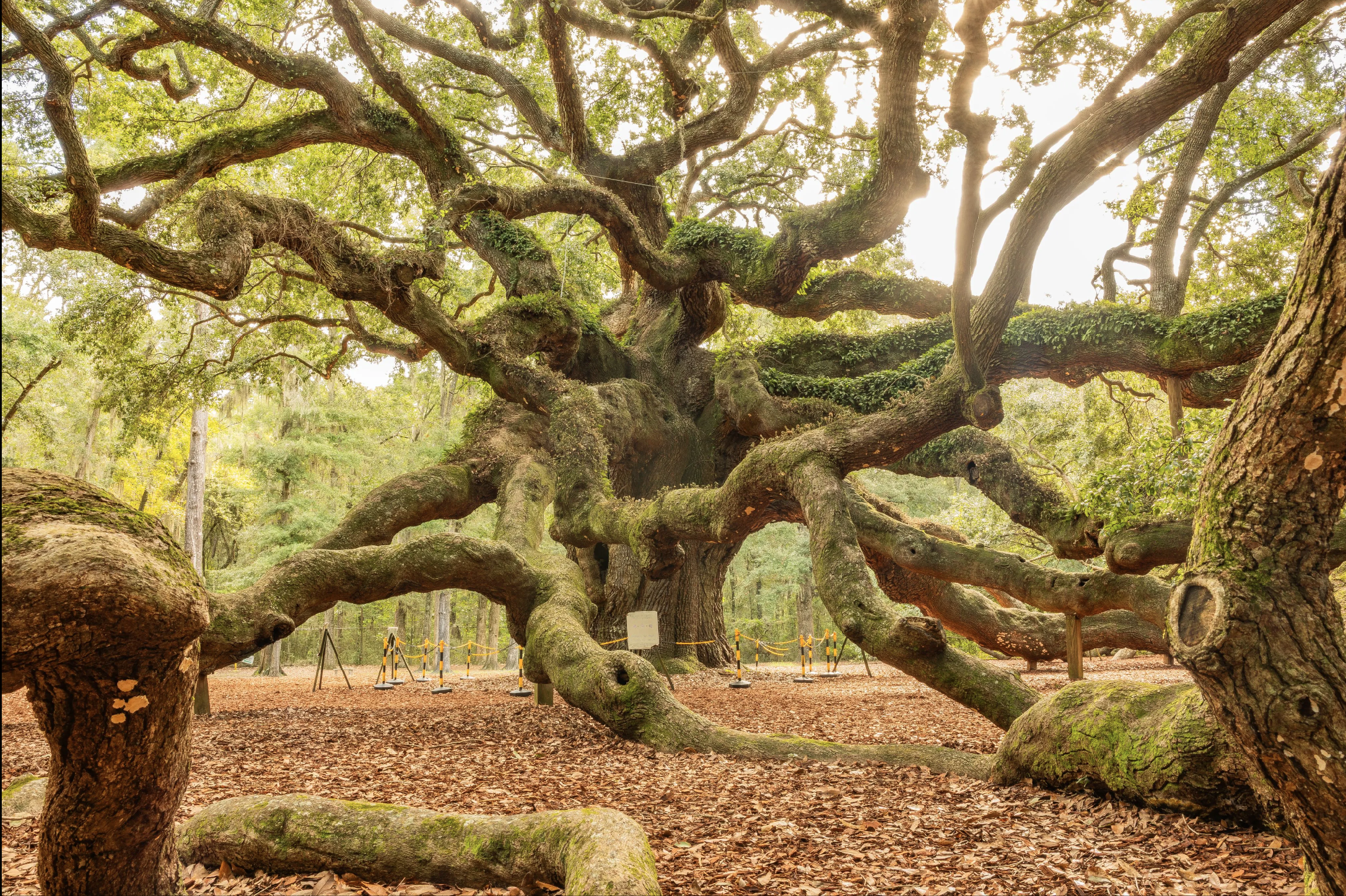
Buchanan has incorporated paintings from well-known artists like Van Gogh’s “Starry Night” and Monet’s “The Palazzo Ducale.” Yet, the 10-Minute Challenge is evolving in terms of art selection and his personal vision. Paintings, woodcuts, and tapestries were included in previous challenges. September’s challenge was the first time they sent a photographer to commission the Angel Oak in South Carolina. Introducing other mediums, especially a photograph, gives the viewer a realistic experience.
Since beginning the 10-Minute Challenge, Buchanan has noticed a change in his own practice with observation. Each month, he lives with a new image and speaks to the people behind its creation. Each of their perspectives teach Buchanan to acknowledge the small things.
Buchanan recalled a recent boat ride down the East River. As they passed under the Brooklyn Bridge, Buchanan was struck by the shadow of the bridge reflecting off the water. “I think beforehand I wouldn’t have paid much attention to it, but now I’m kind of like, ‘oh, what colors are inside that shadow?, Buchanan said.”You think ‘shadow,’ you think ‘black,’ but really there’s a lot of purple and a lot of blue and a lot of green in that shadow and that makes the world much richer.” This experience emphasizes attention to detail, which can alter how we view mundane objects or experiences. Taking in such details helps center one’s focus and awareness just as intended in the 10-Minute Challenge.