Noctiphany: The cozy late-night radio show where two friends trade playlists and discover new sounds
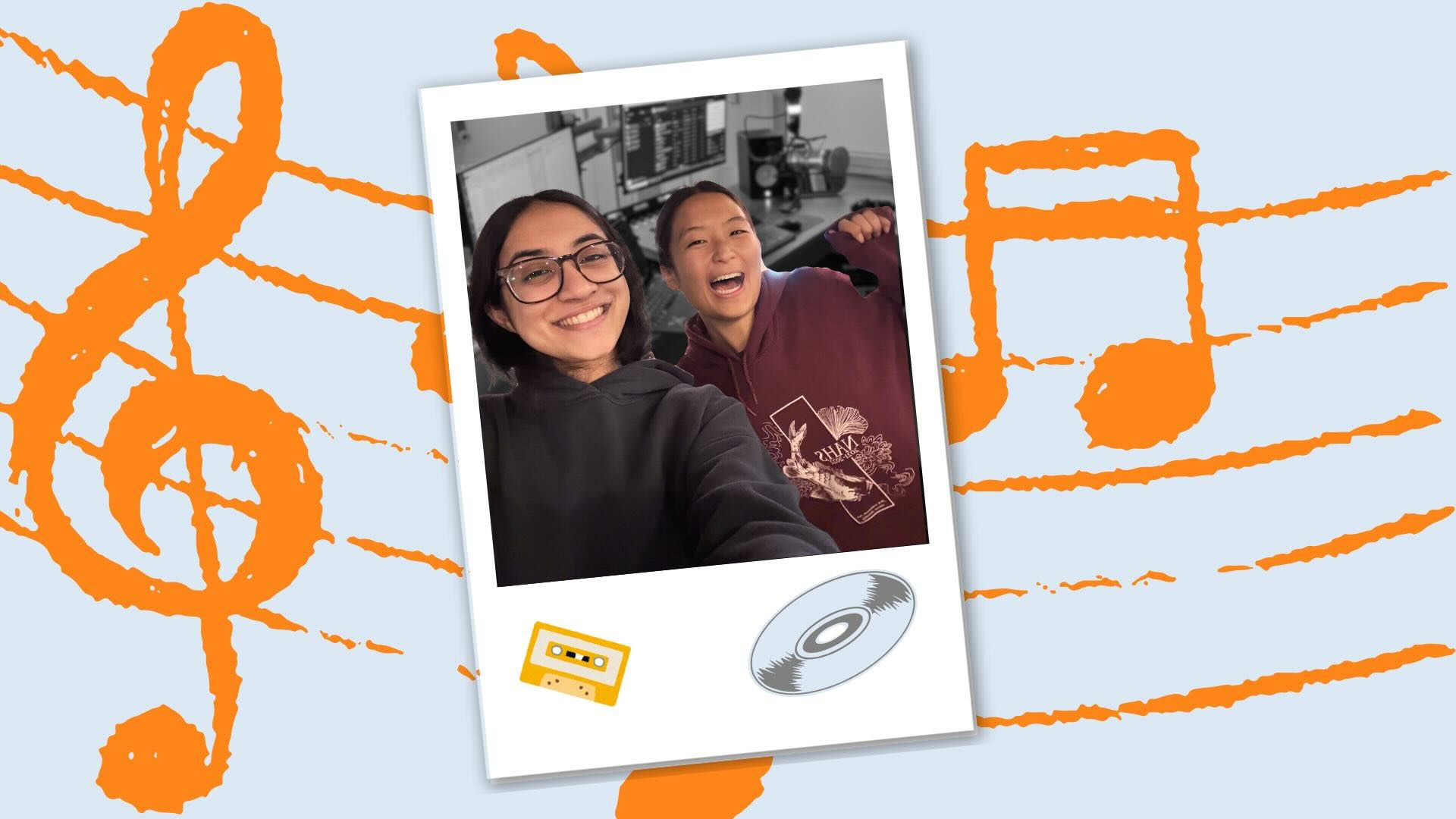
Sharon Pan and Amelia Dsouza are longtime friends and fourth-year students at Northeastern University from Edison, New Jersey. Together, they co-host “noctiphany,” a late-night radio show on WRBB 104.9 FM. Each week, their two very different playlists become a “sleepless nights” rating game as they trade songs, build themed playlists, and look for common ground in their music tastes from 1 to 2 a.m. on Tuesdays. The vibe is cozy and low-pressure, more like hanging out in a dorm room than performing on air, with friends texting in live, Amelia’s sister listening from California, and any night owls who tune in invited to discover new tracks and share in those small, late-night epiphanies that only music can spark.
How did you decide to start a radio show together?
Amelia: We’d been talking about doing something creative together around music, but it was always a vague idea. past the WRBB booth in Curry Student Center. I looked at Sharon and said, “That’s so cool. What if we started a radio show?”
Sharon: Before that, we had another idea based on the Korean rap show “Show Me the Money.” We listened to songs for it on an Amtrak ride, but got busy and dropped it. This time, we filled out the WRBB application.
How did you come up with the name noctiphany, and what does it mean?
Amelia: We Googled “beautiful words” and downloaded a vocabulary app to scroll and see what felt right. We wanted something that sounded nice, and fit the show. When we saw “noctiphany,” we both stopped.
Sharon: Noctiphany means “nocturnal epiphany.” We wanted a night show, so the nocturnal part made sense and the epiphany part fit the idea of little realizations about each other’s music.
What is the “sleepless nights” rating scale, and how does it work on the show?
Amelia: Because the show is called “noctiphany,” we wanted a rating system tied to staying up late. Back in our freshman and sophomore years, we were both up late all the time, so we decided to rate songs by how many sleepless nights we’d “sacrifice” to keep listening.
Sharon: The scale goes from one to five sleepless nights. Five means we love the song so much we’d hypothetically give up five nights of sleep for it.One means it’s not that deep for us. For Amelia, tempo and production matter a lot, since she’s very house and EDM, so that influences how many nights a song gets.
How do you prepare for a new episode each week?
Amelia: We keep the prep intentionally light. On the day of the show, we pick a theme, like chill night, rap night, city pop night — whatever we’re feeling. A couple of hours before we go on air, one of us creates a Spotify playlist and we both start adding songs that fit.
Sharon: Every episode gets its own playlist with a simple name, like “noctiphany week two” or “episode three.” We don’t script what we’re going to say. We know the theme and the tracks, but we free-form the talking. The whole point is for it to feel organic and low pressure, because this is our stress relief, not a polished, over-planned project.
What actually happens in the WRBB booth while you’re live on air?
Sharon: When we get into the booth, we log into Spinitron on one of the monitors with our DJ username and password. That’s where we mark that we’re on air, cue the playlist so the system knows what we’re playing, and see the live listener count. There’s also a form where we log when we were on and which songs we played.
Amelia: On the second monitor, we have our Spotify playlist open. We talk a bit, play a block of songs, then come back on the mic. We have to play about 90 seconds of PSAs (public service announcements)near the end—short public service announcements the station is required to run. Behind the scenes, we juggle the playlist order, time those PSAs, watch the listener count, and reply to friends who text us live reactions.
How is producing a live radio show different from producing a podcast, and what do you like about not editing?
Amelia: If we were doing a podcast, we’d have to record, cut out any mistakes, maybe layer in some music, export, upload, and obsess over all the post-production choices. With the radio show, none of that exists. It’s live. We’re kind of just going with the flow. Once that hour is over, it’s done. We can’t even listen back to it because it doesn’t automatically get recorded.
Sharon: The only feedback we really get is texts from friends while we’re on air. That might sound scary, but for us it actually makes things less stressful. We’re not sitting there editing ourselves or re-listening to every moment.
While noctiphany might not be the first thing that comes to mind when people hear “digital media,” Sharon and Amelia’s work definitely lives in that ecosystem. Their show has a dedicated page on the WRBB site—with episode blurbs, past playlists, and listening links—and they extend that presence to Instagram and Spotify to remind listeners when they’re on air and to archive each week’s playlist.
Learn more about noctiphany & WRBB
Explore past episodes and playlists on the WRBB show page
Follow noctiphany on Instagram @noctiphanywrbb for late-night updates and behind-the-scenes moments
Visit WRBB 104.9 FM to discover other student shows
Whether you’re up studying or just can’t sleep, noctiphany is the perfect late-night soundtrack. Consider sacrificing one sleepless Tuesday night to tune in.