The Baseball Playoffs are Here. Which Catchers Just Lost Their Secret Weapon?
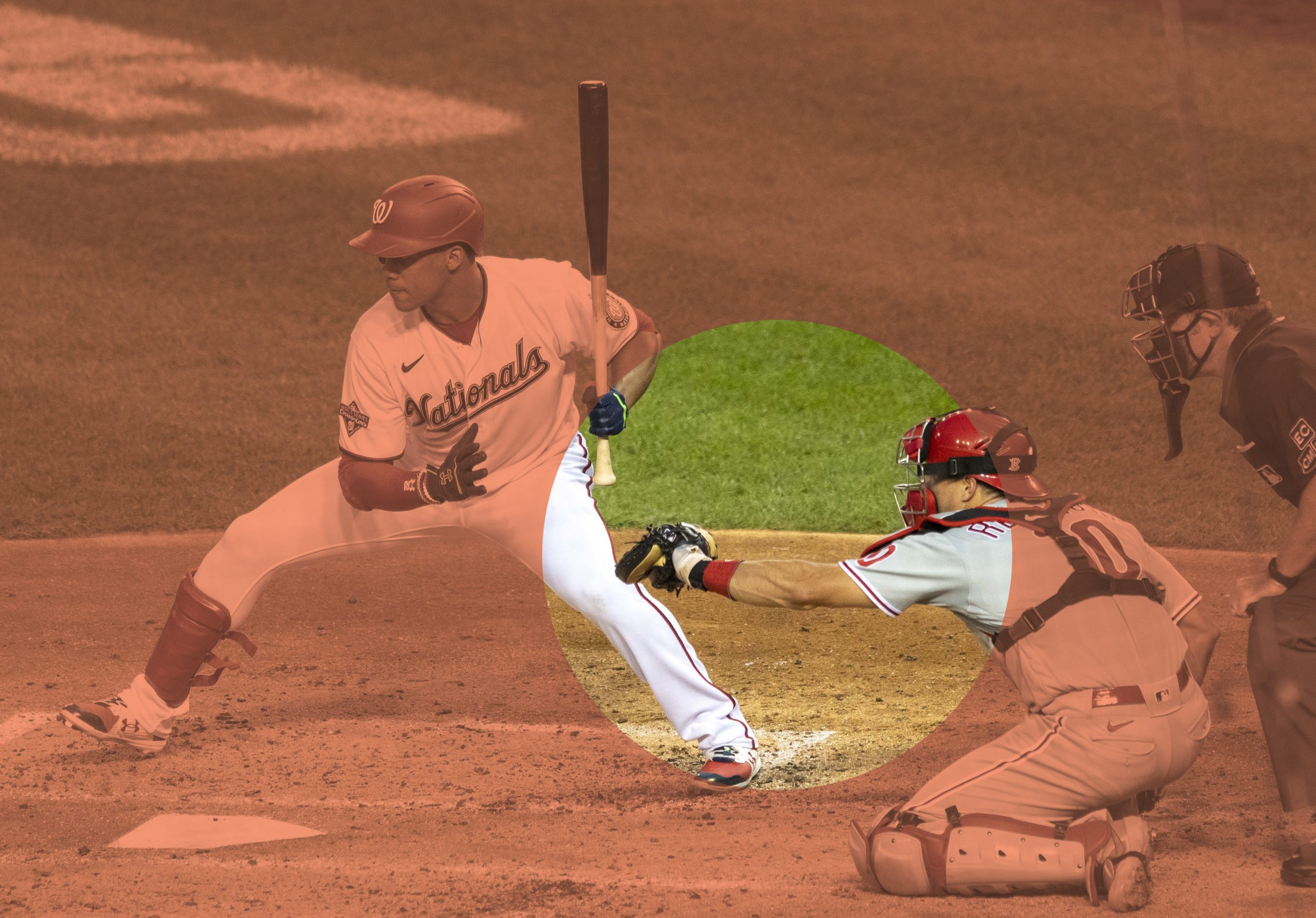
For decades, the best catchers in baseball have been masters of the quiet art of “framing”: receiving a pitch just outside the strike zone and moving their gloves just a bit to make it look like a strike. Umpires got baffled. Strikes got stolen. Careers were built on it.
Beginning this year, there’s been a computer watching every single pitch. And it cannot be fooled.
That’s the reality every catcher walked into this season. Major League Baseball rolled out the ABS (Automated Ball-Strike) Challenge System in 2026, a network of cameras in every ballpark tracking whether a pitch landed inside or outside the strike zone. Batters and pitchers can challenge a call too, not just catchers, though catchers tend to do it most since they’re already positioned to read the zone in real time. The system cuts both ways. It stops strikes that were only ever stolen by a good glove, and it corrects calls that should have been strikes but got missed as balls. A pitch that gets overturned now says as much about where the pitcher put the ball as it does about how well the catcher received it.
So the real question going into October isn’t just who makes the playoffs. It’s whether the skill that used to decide close games still shows up when a computer is calling the shots.
Pitch framing has been one of the most analytically rich areas of baseball research over the past decade. The best catchers in the game were able to steal dozens of strikes a season simply by how they received the ball, and every stolen strike turned the count in a pitcher’s favor. But the ABS Challenge System for the first time gives a catcher’s ability to deceive an umpire a real run for its money. This piece tracks how the 12 playoff-caliber teams’ catchers have handled that newcomer across the season, then looks at whose value held up and whose didn’t.
How ABS works
ABS uses a network of cameras to track every pitch. Each team is given two challenges a game to contest an umpire’s called ball or strike. When a team is fielding, it’s almost always the catcher who calls for the challenge, since he’s already positioned to read the strike zone from his position behind home plate. Once a challenge is called, the review takes about 15 seconds.
The strike zone itself has changed too. The old strike zone ran from the middle of the chest down to just above the knee, the same rough shape for every hitter. Under ABS, the zone is instead tied to each player’s actual measured height, with the top set at 53.5% of their height and the bottom at 27%. That’s led to a small quirk this season: a few players’ measured heights reportedly shifted slightly over the year, so their strike zone moved with them.
None of this exists because umpires are bad at their jobs, since umpires are graded internally on ball-strike accuracy, and most are very accurate. ABS isn’t a war on umpiring; it’s a tool aimed at getting even closer to perfect, on calls that used to live entirely on human judgment.
Three catchers, three outcomes
For years, the best catchers in the game built a reputation on framing: receiving a pitch just off the plate then subtly shifting their gloves and presenting it in a way that nudged an umpire toward calling what was actually a ball a strike. ABS puts a hard check on the practice, since a framed pitch can get overturned in fifteen seconds if it was never actually a strike to begin with.
The bottom line is that there are two ways to measure a catcher. There’s the old way, framing a ball so it looks like a strike, and the new way, using his ABS challenges when the catcher thinks an umpire has called a pitch a ball when it was a strike. And the catchers who grade out best by one measure aren’t always the ones who grade out best by the other.
Starting with the guy sitting at the top: J.T. Realmuto of the Philadelphia Phillies. By the old measure known as framing runs, he’s basically neither helping or hurting his team through his pitch framing abilities. By not consistently stealing strikes (selling a ball as a strike by moving his mitt), he allowed opponents an estimated 0.19 extra runs over the course of the season. That would’ve been a real problem for a catcher a decade ago.
It isn’t one now that ABS challenges are a factor. Realmuto has called 79 challenges this season and won 63 of them, an 80% success rate, the best of any of the 12 primary catchers on playoff team rosters. His net value on those challenges is also the best of the group. He’s not fooling umpires with his glove anymore. He’s just right, more often than anyone else, when it matters.
Then there’s Austin Wells of the New York Yankees, who complicates the story a little, in a good way. He’s the best framer of the catchers on playoff teams by a wide margin, with an estimated 6.57 runs saved over the course of the season by successfully framing pitches. And he’s not bad at the new skill of using ABS to catch bad calls either. Out of Wells’ 130 challenges, he had 82 wins against 48 losses, a 63% success rate. Solidly above average.
Wells is proof the two skills aren’t mutually exclusive. Realmuto shows a catcher can lose the old skill and still be elite, while Wells shows some catchers are just good at this, whether a human is judging or a camera.
Lastly, there’s William Contreras of the Milwaukee Brewers, the cautionary tale of the group. His framing runs are the worst of the 12, with an estimated 5.36 runs given away over the course of the season. He’s also called more challenges than any catcher in baseball this year, 177 of them, and won only 98 against 79 losses, a 55% success rate.
Contreras is clearly willing to fight for a call, but teams only get two challenges a game, and burning them when you’ve only shown even odds of success means you might not have one left when it really matters in a close game.
A few other things stood out while I was at Fenway for the Guardians-Red Sox game on September 24, when Cleveland clinched a playoff spot. Both teams called challenges throughout the night, some of them from Patrick Bailey and Adley Rutschman, the two catchers behind the plate, and by the late innings both sides had burned through their full challenge count. Watching it live made the stakes of “only two tries a game” feel a lot less abstract than a stat sheet does.
Rutschman was traded to Boston in the middle of this season, but his numbers here reflect his full 2026 season, with most of it accumulated with the Baltimore Orioles before the trade. Worth remembering when you’re reading anyone’s season-long stats this year: a decent number of these catchers changed teams mid-year, and their numbers don’t entirely belong to just one team.
On the other end, Cleveland’s Patrick Bailey is a strange case. He’s still considered one of the better pure framers in baseball, a guy who used to lead all of baseball in that department. But his challenge numbers this season are close to Contreras’s: second-most challenges thrown, second-worst value. Whatever makes him elite at the old skill hasn’t carried over to the new one.
And on the south side of Chicago, it’s not one catcher struggling; it’s the whole position. Between Kyle Teel, the White Sox’s primary catcher, and the backups who’ve cycled through, nobody on that roster grades out as even average at this. That’s a team-wide problem, not a one-player problem.
Where pitchers pitch in
Of course, a challenge isn’t purely a catcher’s job. A pitcher who trusts his own read of the zone can push a catcher into calling a challenge he wouldn’t have made alone, and good chemistry between the two of them can mean a team finishes a game with both challenges still in reserve, or spends them wisely when it counts. Most teams still lean on the catcher to make the actual call. But it’s worth remembering a catcher’s numbers this season were shaped, at least a little, by who was throwing to him.
What it means going for the playoffs
This is the first MLB playoffs where a piece of technology has taken a real seat at the table. The skill that used to decide close games quietly, in a catcher’s glove, didn’t disappear. It just moved, and now something that doesn’t care how convincing you look judges it. Only whether you were right.
There’s something worth sitting with in that. Baseball is a sport built on failure, maybe the only one where a batter who gets out seven out of ten times still makes the elite. Chasing more precision isn’t a bad instinct, and it likely means fewer games decided by a call that was simply wrong. But it also means one more piece of the game that used to run on feel now runs on a measurement. For a catcher, that’s not entirely a loss. A guy who was never a great framer can still win games with a good eye and sharp instincts for when to challenge, which means the position now rewards a different kind of intelligence, not a lesser one. Whether that trade is progress, or something baseball quietly gives up in exchange, is still an open question. Probably one that stays open for a while.

- The Baseball Playoffs are Here. Which Catchers Just Lost Their Secret Weapon? - September 29, 2026
- Moneyball Strikes Out: Do Higher Payrolls Buy you More All Stars? - July 14, 2026
- New to the World Cup? Here’s a Guide to Understanding it Through Data - June 10, 2026