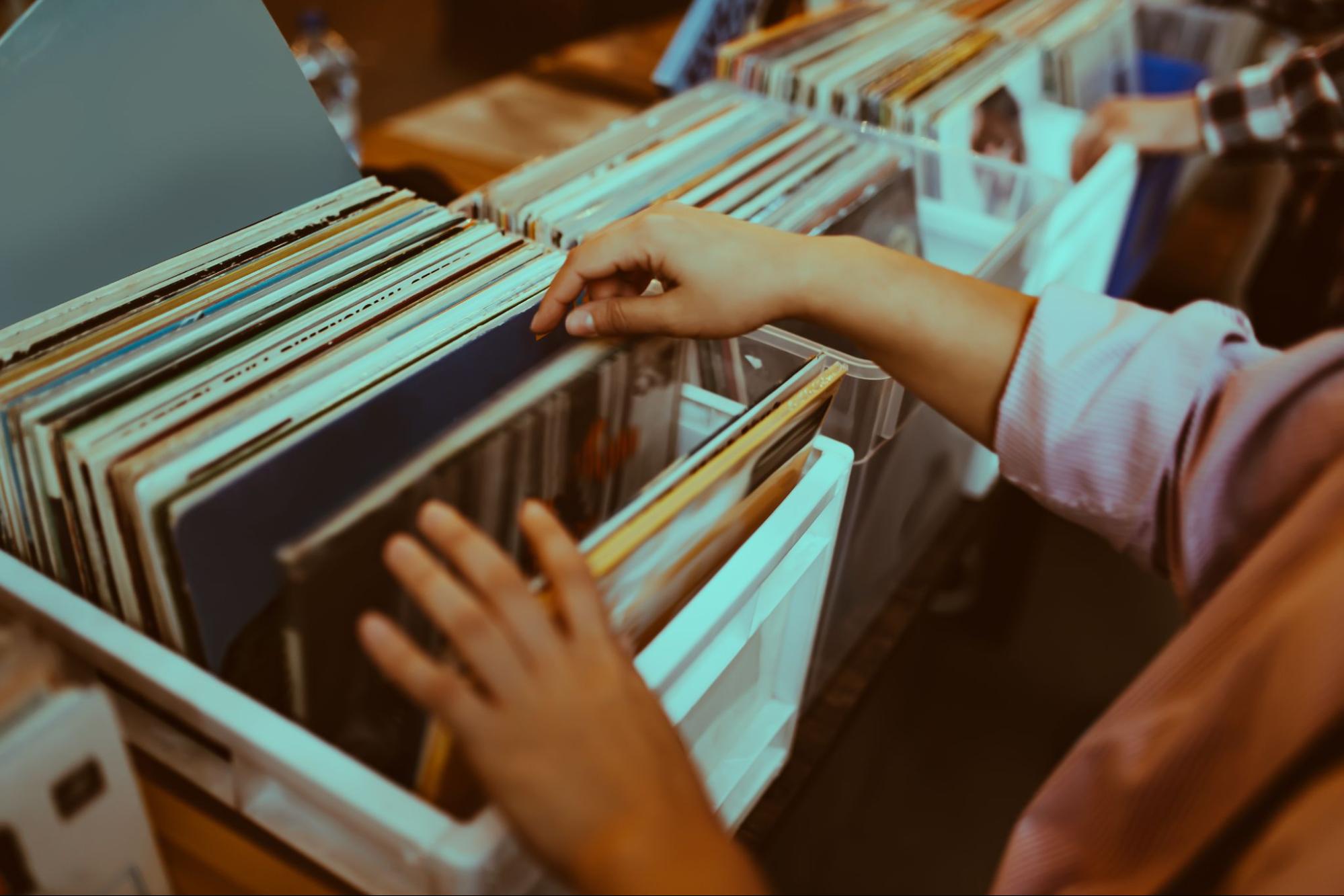
Gone Analog: Why generations raised with streaming are paying to own physical media
Roughly half of Gen Z and millennial CD buyers don’t own a CD player, according to Luminate. And yet they’re buying CDs, along with millions of vinyl collectors, 4K movie fans, and graphic novel readers. After more than a decade of streaming everything, everywhere, Americans are paying extra for physical media they can actually hold.
So what’s driving it, and how are media companies cashing in?
What are the numbers?
Vinyl is still the headliner. In 2025, U.S. vinyl sales grew for the 19th straight year and passed $1 billion for the first time since 1983, according to the RIAA. For context, that’s the year after Michael Jackson released “Thriller.”
2026 is turning the volume up. The RIAA’s mid-year report found physical music revenue jumped 26% in the first half of the year, powered by 18% vinyl growth and a 59% spike in CDs. That CD surge is especially striking because CD revenue actually fell in 2025.
Luminate, which tracks consumer sales rather than industry revenue, tells a similar story. CD sales rose 16% in the first half of 2026, outpacing vinyl’s 2% growth, largely thanks to BTS’ “ARIRANG.” That raises an obvious question: is this a CD revival or a BTS revival? The answer is a little of both. “ARIRANG” came in five CD versions and sold about 567,000 copies. Strip out BTS and the rest of K-pop, and CD sales still grew 7%.
K-pop’s collector culture is also reshaping where people buy music. It runs on photo cards, album variants and store-specific exclusives. That helped Target and Walmart grab nearly 30% of physical album sales, Consequence reports.
Movies are a tougher sell. U.S. spending on DVDs, Blu-rays and 4K discs fell 9.3% to $870 million in 2025, but 4K Blu-ray sales rose 12%, per the Digital Entertainment Group. The overall decline was also far gentler than the previous year’s 23.4% drop.
Print is a mixed bag. Print book sales rose for a second straight year to 762.4 million units in 2025. Graphic novels bounced back 9% after two years of declines, according to Circana BookScan data. Newspapers aren’t invited to the party: 24 of the 25 largest U.S. dailies lost print circulation, Press Gazette found.
Magazines are the wild card. W just launched WYouth, a print title for teens, citing a poll in which 71% of Gen Z said print magazines feel more authentic than digital ones. It’s part of a wave of new teen print magazines.
Why are people moving to physical media?
If half of the people who buy CDs don’t have a way to play them, why are they buying them? For some, it’s merch. Many artists are now putting vinyl records and CDs on their merchandise websites or selling them at merch tables when they go on tour. As BTS and the K-pop industry have shown, fans often buy physical albums for their aesthetic appeal and the chance to own limited-edition versions from their favorite artists. Displaying albums on walls as art or conversation pieces has also become popular among younger consumers.
Taste is part of it too. Luminate found that 60% of Gen Z listeners say they most often listen to music from the 1990s or earlier, up from 18% in 2021. Turns out the kids are alright, and also really into their parents’ record collection.
The decrease of affordability in America is also correlated to the popularity of thrifting, which also makes an impact in the resuscitation of physical media. More young people are going to second-hand stores and using nostalgia to drive their curiosity to invest in these older formats. According to ThredUp’s annual resale report, 62% of Gen Z shopped secondhand in 2025. That figure covers clothing, not records. And the RIAA’s numbers only count new music sales. So whatever crate-digging is happening at secondhand stores isn’t showing up in the official totals.
And then there’s screen fatigue. In a feed full of algorithms and AI generated content, a physical object can feel like a break. People are moving away from screens in general with a large increase happening in people creating physical media of their own, especially among Gen Z and Gen Alpha. A Harris poll found 81% of Gen Zers wish they could unplug more easily.
What does “Buy” mean these days?
Streaming won the 2010s for good reason: it’s affordable, instant, and bottomless. But as services consolidate and prices rise, more people are asking what they actually own when they click “buy.”
The Federal Trade Commission issued a consumer alert in 2024 warning that digital “purchases” may not come with the rights people expect.
California went further. Gov. Gavin Newsom signed AB 2426 in September 2024. Since Jan. 1, 2025, digital storefronts can’t use words like “buy” or “purchase” unless they disclose that customers are getting a license. Goods that can be permanently downloaded are exempt.
Gaming may be the clearest example of where things are headed. Sony launched the PS5 Pro without a built-in disc drive. This summer it announced it will stop producing physical discs for new PlayStation games starting in January 2028.
Some influencers are encouraging people to invest in physical media, citing concerns about AI-generated content and the future of digital access to music, movies, television and news.Consumers are pushing back. Stop Killing Games, a campaign started by YouTuber Ross Scott, passed a million signatures demanding that publishers stop shutting off games people paid for.
How are media companies reacting?
In a collector-driven market, hardware makers are fusing retro formats with modern features. A new generation of CD players adds Bluetooth, USB-C charging and headphone outputs. Shanling’s $199 EC Play, for example, is pitched squarely at younger listeners.
The smartest players aren’t picking a side between physical and digital. They’re building products that live in both. Netflix, the company that taught us to stop buying DVDs, partnered with boutique label Arrow Video on a $200-plus “Stranger Things” box set, its first time putting the full series on disc. Xbox now lets players turn game discs into digital licenses that transfer when the disc is sold. And since October 2026, Billboard counts “smart albums” toward its charts: physical collectibles with a QR code or NFC chip that unlocks the music on your phone. The future isn’t physical or digital. It’s something you can hold that also works on your phone.
None of this means physical media is about to overtake digital. Streaming still made up 82% of U.S. music revenue in the first half of 2026. Subscription streaming accounted for more than 92% of home entertainment spending in 2025. But that was never really the point. The people buying CDs they can’t play aren’t rejecting streaming; they’re hedging against it. Prices keep rising, libraries keep shrinking and “buy” keeps meaning less. A disc on the shelf is one of the few things in their media life that no company can raise the price on, edit or quietly take back.