Digital Fashion Rises as a New Frontier for Clothing Design
Digital fashion is an emerging field in which styles exist entirely online, and garments are created with 3D design software, virtual and augmented reality, and video game engines. It trades the traditional wearability of clothes for a greater focus on aesthetic design that may not be possible in the physical world.
While the art form is still in its early stages , it allows users to dress avatars in online games, try clothes with AI, and buy and sell looks as collective NFTs.
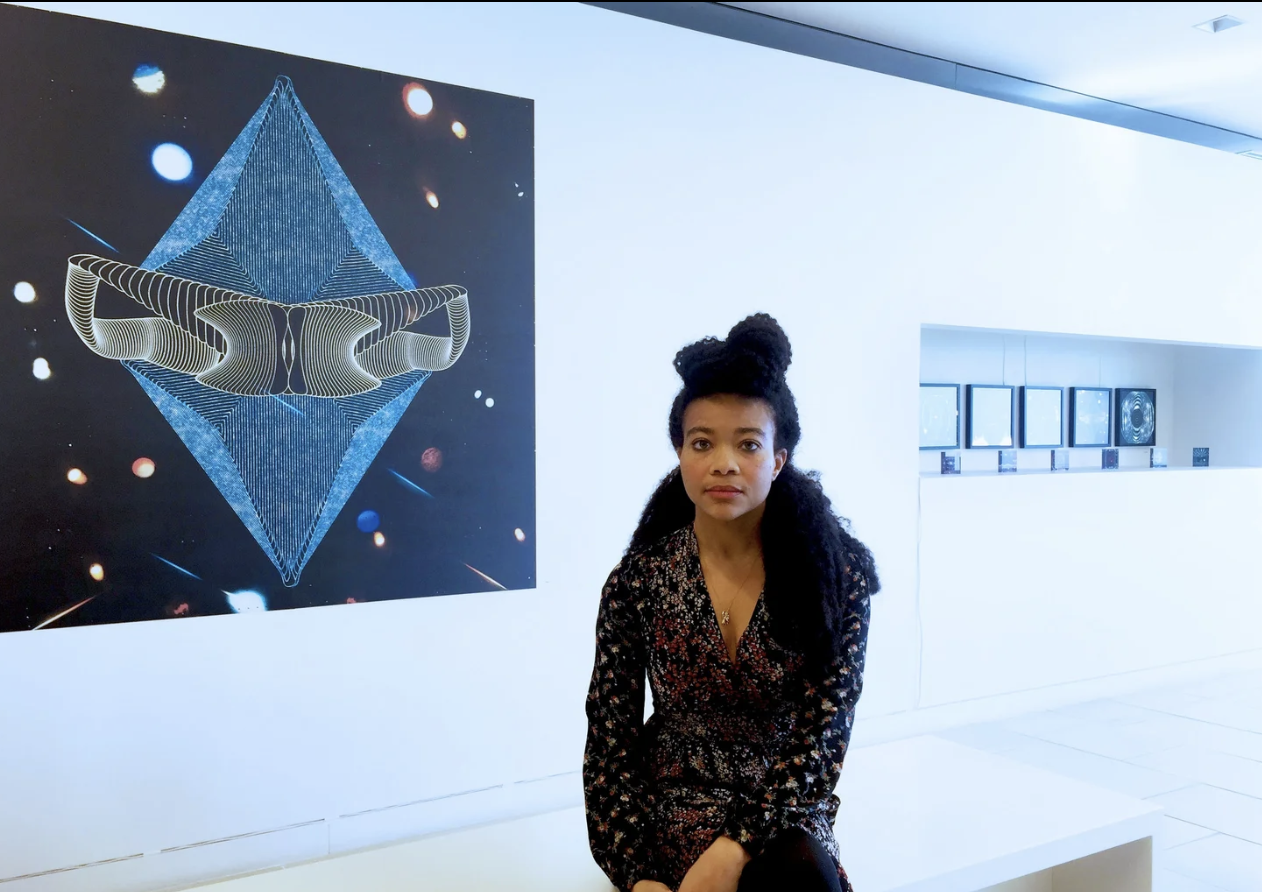
Rory Scott, a Detroit-based multi-disciplinary artist, is a member of a small but developing community of digital fashion designers who create virtual wearables. Storybench sat down with Scott to discuss the ins and outs of this new medium.
How would you define digital fashion, and where do we see it?
I think that now, especially with AI, it is taking on a whole new definition. You have gamification with avatars, then you have fashion in general with AR (augmented reality). So now you have this wonderful springboard to be able to create these fake garments and translate them back into different platforms like AR. So, for me, digital fashion is an amalgamation of things.
Designing in 3D software first, instead of working from a physical bodice, is a key component of what makes up digital fashion, too.
Is the community a small or large group? How do you describe the status of the field as of now?
I think there have been people in the scene really wanting to push digital fashion for a while, like DressX (an online platform that allows users to “wear” clothes in photos through generative AI). They came out with a platform years ago where you could have a mirror to try on AR fashions.
And I think there are a lot of people who are like me, who are kind of lone wolves, where we are just artists and creators who are like, “Whoa, I have access to these tools now. I can do something that I haven’t been able to do before.” There are people in the fashion industry, too, who are starting to adapt to these tools.
Where does the demand for digital fashion come from?
There is this experimental part of it where artists like me are coming in who may have had an interest in fashion, but would have never gone that route, that are now jumping in because there are tools that allow them that sort of access. I think that most people see digital fashion in our lives through gamification and avatars.
Can you tell me about your design process and what software you use?
Well, I am all over the place… but for my AR fashions, I typically use Lens Studio, which is a part of Snapchat. That has the best body mapping. So, what I typically do is either design something and bring it into the program and work with it on the body, or I design elements and assemble them in the program. I have also used AI to create elements and outfits. I’ve also digitally sculpted them myself.
Can you clarify a bit more about how you do the technical aspects?
I typically start in a program like Blender, which is a 3D modeling program. It could be an element or an entire outfit itself, then I will take that 3D model and import it into Lens Studio. That is where the AR happens. That is also where I do texturing and edit the materials and physics to make the flow or movement.
After all that, it’s ready to be published, and people can use it.
Do you think digital fashion will have an impact on the traditional fashion industry?
I think right now we are in the initial stages. I think there will be a spill over from areas like 3D printing to be able to have different sorts of fabrics and materials. That technology is going to afford us the knowledge to take these digital items and bring them into reality.
For the first time in a long time, we are not going to have a regurgitation of the past, and hopefully, we’ll have new life injected into fashion instead of running on these 20-year cycles we typically run on.
What might draw someone to digital fashion?
I think that it is something that opens the door to anyone with a phone to experience high fashion. Now you can have this experience of a high-end feel, seeing what you would look like. That may seem small, but it’s huge in how people can view themselves.

- Digital Fashion Rises as a New Frontier for Clothing Design - January 6, 2026