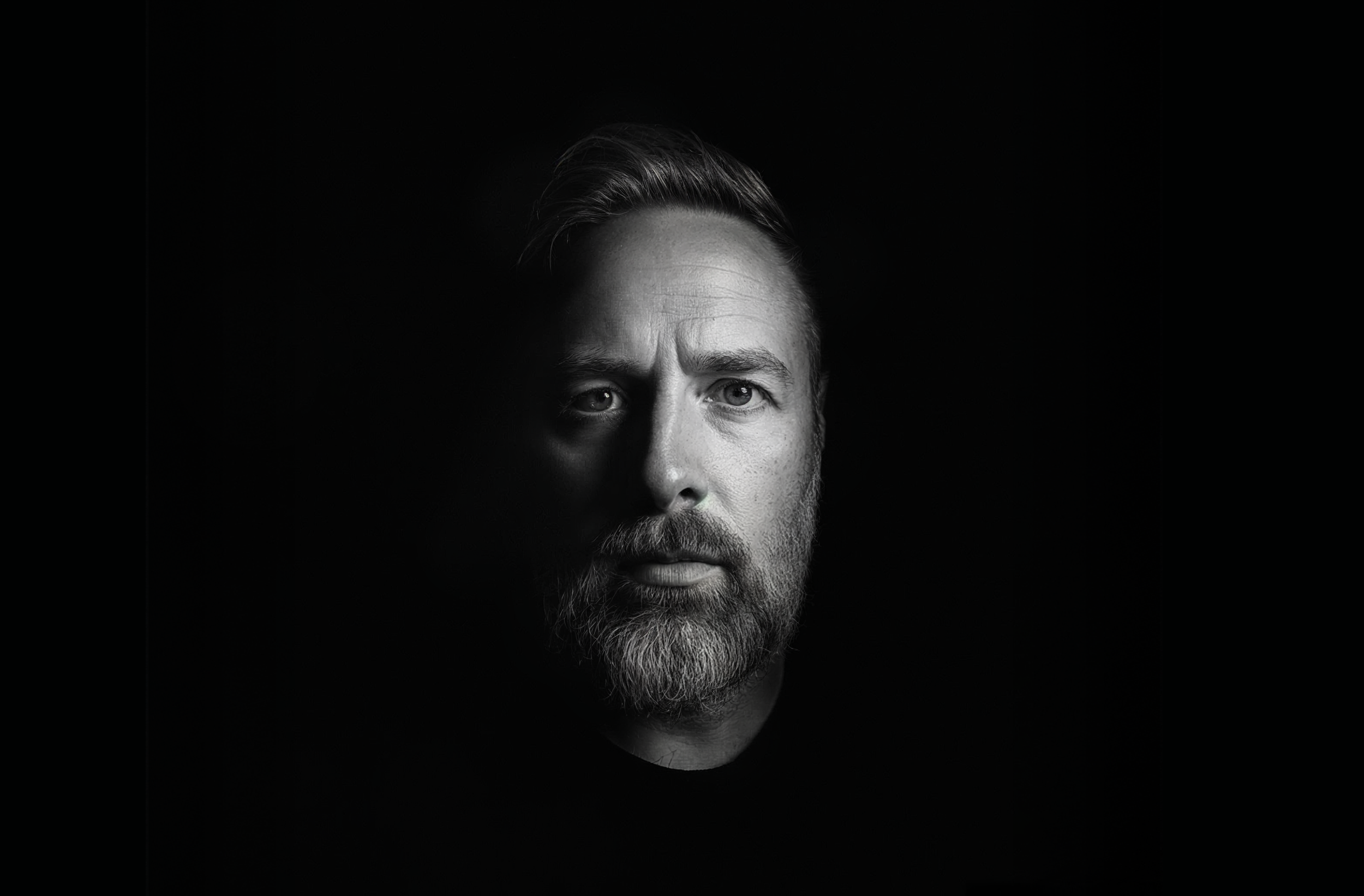
Tracking Success: Pablo Vio looks back on the challenging development of the interactive “Bear 71”
Despite being made over 10 years ago, the documentary “Bear 71” remains one of the most innovative pieces of digital journalism. The humanistic and empathetic storytelling brought thousands to the website to experience a bear’s story as she traverses the Canadian Rocky Mountains and protects her cubs, invoking a broader theme of the effects of industrialization on wildlife.
But the creation of an abstract 3D data map of Banff National Park where viewers can interact and explore the story, and iconic digital work in part relies on the Executive Creator Director of “Bear 71” and Co-Founder of Jam3, Pablo Vio.
Since then, Vio has worked on multiple marketing projects for companies such as Adidas, Pepsi and House of Dragon, but he reflects that his experiences and collaborative work with Executive Producers Loc Dao and Robert McLaughlin, and Creator Jeremy Mendez have not only made “Bear 71” to be a revolutionary work but also a lasting one.
This interview has been edited for length and clarity.
What kind of aspects of “Bear 71” drew you into taking it up as a technological, innovative challenge?
I thought it was quite neat and diverse in how “Bear 71” spoke to different users online in accordance with the different attention spans that we had at the time. So, that certainly drew me in from an interactive, storytelling standpoint.
And then, of course, the technology that we used drew me in. At the time, we were using this custom voxel engine [a software framework often used for creating 3D games] that allowed us to create these data points that turned into what we call “The Grid.” At the time, that technology was pretty new and something I’d been experimenting prior to “Bear 71.” It was pretty neat to use something that we were already experimenting with and then use it on an actual project to tell a meaningful story.
How did you and the team develop the visual aspect of “The Grid,” such as navigation, the security cameras, and a topographical map?
It was a process. One of the creators, Jeremy Mendez, had a pretty good sort of notion that he wanted it to look very “data” — not super modern and not super intentional — but with enough similarities to mimic what a grid would look like if it was a real piece of software at the time.
We went through probably like 20 different rounds of user interface design, because when you are telling such a complex story, you don’t want the design itself to become too overbearing. We wanted the set to be a choose-your-own-adventure of finding content, such as wildlife camera footage, digitized landscapes, and Easter eggs. We had this golden rule that when you develop interactive experiences, you have to follow the “two-or-twenty rule,” which is when you have enough content for someone to experience the site for either two minutes or enough content for 20 minutes.
Did you run into any challenges while trying to create this piece?
There were a lot of challenges around the general sort of weights and the processing of all these data points at any given time. When you put everything on the internet, you have to think about different browser bandwidths. We did have quite a bit of work to do to get the experience to be small enough to be able to play on desktop and mobile platforms.
We wanted to be very delicate about how we told “Bear 71,” so that we weren’t too on the nose about it, but enough that people would hopefully get to the end of it and realize what happened with Bear 71. And ultimately to convey that, while we [the viewers] were surveilling the Bear, the Bear was surveying us as well.
What was it like to try to humanize the bear’s story in order to connect with the audiences?
It was interesting. Ultimately, we wanted to bring a personality to the bear because, at the end of the day, the story was pieced together through data. We wanted to create an understanding of the different challenges that animals go through with humans disputing their environment. We really wanted to humanize the story so that people connected with the bear in an emotional way, such as with some of the bear casualties that happened due to human encroachment onto the land.
Since Bear 71 came out a decade ago, do you think that the documentary still holds up today and is still significant to the modern-day conservationist conversations going on?
There are so many of these documentaries that talk about endangered species or how humans are disrupting our ecosystems.I think what worked well about “Bear 71” is that we made it emotional and different.
Some people like to tell stories differently, just from an art form standpoint. But I think our development was really meaningful for the story itself. I’m sure there are lots of other great documentaries out there that have won Oscars and other awards, but I think, as far as the uniqueness of the approach, I do think that “Bear 71” still holds up quite well.