Will Bottone Designs Emotion in Motion: Turning Three Seconds into Story
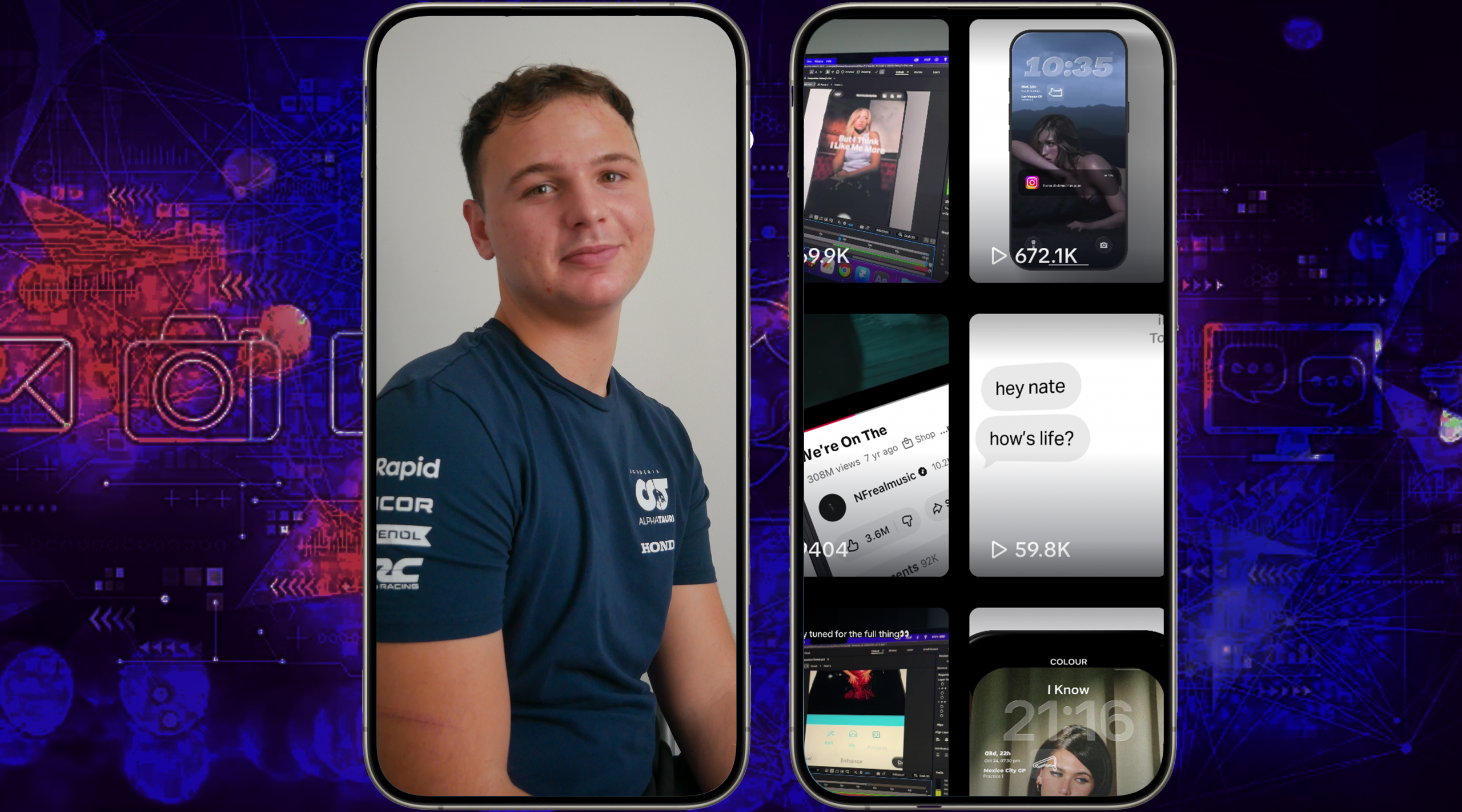
Imagine scrolling through TikTok or Instagram and pausing for a few seconds because the animation makes you feel something. That’s the moment video-motion designer Will Bottone, a UK-based motion designer and creative at SHOUT, is chasing. Trained in film production, Bottone translates his love for short-form design into a form of storytelling that bridges emotions, technology, and creativity.
Remixing pop culture moments with cinematic precision has earned Bottone millions of views and recognition in the social media world. Behind the smooth transition and satisfying edits lies a deep question: How do you make a video relatable in three seconds or less?
Through a blend of film instincts, sound design, and emotional clarity, Bottone is redefining what storytelling looks like in the social media era.
Storybench spoke with Bottone to unpack how short-form animation can tell emotionally resonant stories in a matter of seconds. Bottone discussed his transition from film production to motion design, how he approaches emotion in digital storytelling, and what today’s creators can learn about blending creativity with strategy on social media.
Why Motion Design?
I’ve always looked at storytelling through emotion first. When I studied Film Production, I realized the projects I was drawn to most were the ones with genuine heart. I specialized in producing, so my role was to make those stories happen – to bring ideas off the page and into something people could feel. That carried straight through into motion design. A lot of people see motion as purely technical – which it is, but it’s also, in a way, like directing your own short film. Every movement, color, and transition feeds emotion to the audience. Whether it’s a brand project, a lyric edit, or a film, there’s always an audience at the center. That audience is the most important. In motion projects, you’ve got three seconds before someone scrolls. That’s a creative constraint I’ve grown to love — it forces you to strip everything back to intent: what do you want someone to feel, and when?
How do you build story and emotion through design and movement?
In creative and performance, it is impossible to build without an emotional strategy. I treat every UI animation like a mini scene. The pacing and rhythm, even a simple button press, can feel satisfying or cold depending on timing, easing, and how one moment flows into the next. Reenacting the screen to behave like people is one thing I put into mind. A notification can interrupt you like a friend. A typing bubble can build tension. Those small interactions carry athe story if you choreograph them right. My approach is to find the emotional core of what we want to say and then translate it into motion, whether that’s through pacing, tone, or visual metaphors that feel native to the platform. That’s when it stops feeling like an ad and starts feeling relatable.
Walk me through the process for one of your viral animations.
It usually starts with a feeling – a lyric, a sound, or a visual behavior that makes me want to build a world around it. Take my Raye edit for ‘Where Is My Husband?’, I’d heard her perform it live at the British Grand Prix a few months before, and instantly knew I wanted to make something for it.
Once I had the track, I looked for the story inside it. The idea of searching for the person you love is such a universal feeling, so that became the thread. The concept of ‘searching’ fits perfectly into my style of animation – things like Find My iPhone, Maps, Siri, Uber. I broke it down like a film scene: opening beat, escalation, payoff. Then it’s about making sure the motion and pacing feel natural, animating the phone UI, and posting it as close to the song’s release as possible – it always helps when there’s already buzz around it.
What makes something work online isn’t just visual quality – it’s timing, tone, and relatability. If someone sees it and goes, “that’s exactly how that feels,” you’ve already won. The algorithm just amplifies it; the connection makes it spread. And in a feed full of unpolished user-generated content, when something clean, intentional, and emotionally charged shows up, people notice. It feels like a breath of fresh air – or, as the comment section likes to put it, “TikTok Premium.”
What advice would you give to students or young creators who want to combine design, storytelling, and social media to tell meaningful stories?
Stop chasing trends and start designing emotions. Every tool you use — whether it’s After Effects, Premiere, or CapCut — is just a vehicle for human reaction. Learn the rules of storytelling, because those never go out of date.
And post your experiments. Most of my best-performing work started as something I wasn’t sure anyone would care about: it was just something I cared about. That’s the key: make things for yourself first. Create something you’d want to watch, and that you’ll still be proud of after you post it. At that point, the likes and views are a bonus, not the goal.
The internet’s weird — the moment you stop trying to please everyone, people start paying attention.

- Will Bottone Designs Emotion in Motion: Turning Three Seconds into Story - December 30, 2025