Fighting for attention: a reckoning for augmented and virtual reality in immersive media
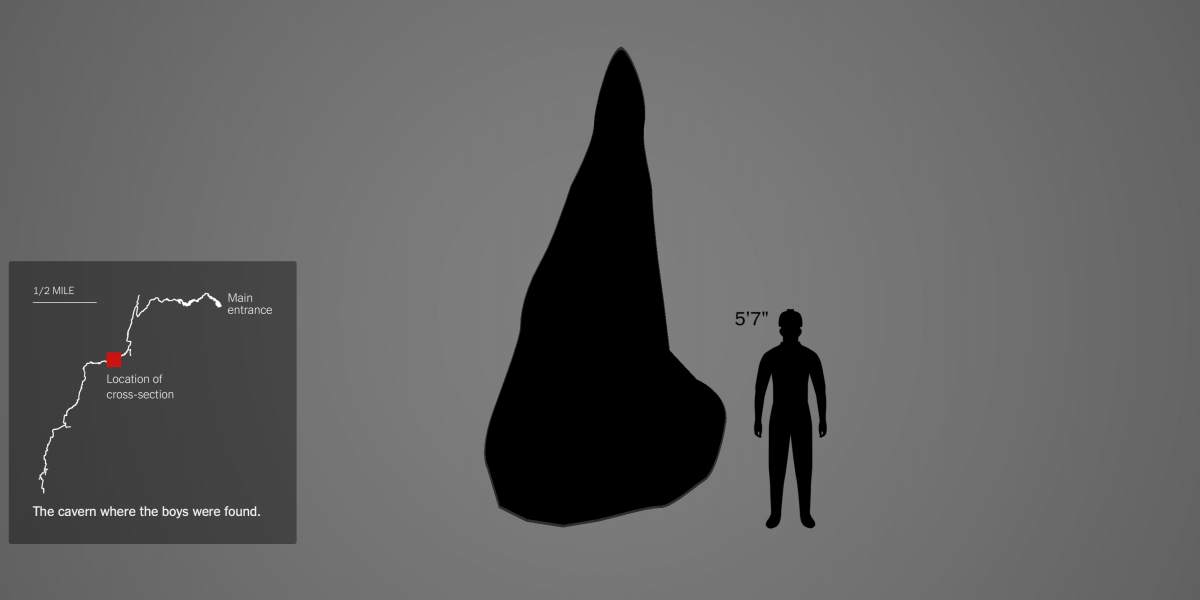
It’s been seven years since The New York Times made a splash by using augmented reality (AR) to allow users to experience the plight of a Thai youth soccer team trapped in a cave, part of an early experiment in immersive media.
“We wanted to showcase that we had this data about all the little cave slices that they had to squeeze through and all these little holes,” explained Graham Roberts, director of immersive platforms storytelling at the Times. “Augmented reality does give you a real sense of scale by putting things within the context of your environment,” Roberts explained. This experiment demonstrated the potential of immersive media to deepen audience understanding, yet it also highlighted the challenges of producing and delivering such content effectively. Since then, both the possibilities and challenges have come into focus.
While technological advancements like smartphones have streamlined traditional reporting, the rise of immersive media—virtual reality (VR), AR, and 360-degree videos—has introduced new challenges for journalists and their audiences. As the media landscape evolves, immersive storytelling is being positioned as a transformative tool, but questions remain about its practicality, accessibility, and long-term viability.
Immersive media deepens audience engagement by offering vivid, interactive experiences, but it faces challenges: the lack of accessible platforms. Devices like VR headsets and AR-enabled applications remain niche, limiting the potential audience for this content.
“They are a solution without a platform,” said Roberts. “360 video is an interesting experiment, but I don’t think that they have much of a future for a variety of reasons, at least not in the way we’ve been doing it. Virtual reality and augmented reality have the same problem currently.” While immersive storytelling has undeniable potential, the devices available to consume this content often fail to provide widespread access.
Even for people with the technology, immersive media demands a significant investment of time and attention—two commodities that are increasingly scarce in today’s fast-paced media environment. “You are not going to engage your audiences well if they’re not able to give you that focus and time,” said Yuliya Parshina-Kottas, a freelance visual journalist and 3D motion artist. “If they’re able to sit down and give you that focus, then the engagement is going to increase exponentially.”
Challenges on the production side
On the production side, creating immersive content is resource-intensive, requiring both specialized expertise and costly equipment. Many newsrooms, especially smaller outlets, struggle to justify these investments.
“There is a two-pronged issue,” Parshina-Kottas explained. “First, you have to produce the content in a creative way. Then, you have to figure out how to deliver it on platforms that weren’t designed for it.” The logistical challenges of adapting immersive content to existing platforms add another layer of complexity.
Despite these challenges, immersive media has shown it can enhance storytelling when used strategically.
“Sometimes data visualization is the best way to explain something. Sometimes a photograph is the best way to explain something. Sometimes video is the best way to explain something,” he said. “And you can argue that sometimes an immersive experience is the best way to explain something.”
However, Jimmy Roberts, NBC broadcaster and writer, cautioned against relying too heavily on immersive technology as a storytelling crutch. “If you rely on them to be the primary method by which you tell the story, I just think that you’re looking in the wrong direction,” he said. “Good storytelling is about humanity, readability, and making people feel.”
As immersive media continues to evolve, its role in journalism remains uncertain. While it can amplify a story and create empathy, it cannot replace traditional storytelling. For audiences to embrace immersive media, platforms must become more accessible, and the content must offer meaningful, focused experiences.
“We are physical beings, and if we are able to give our focus, attention, and time to such an experience in a meaningful way, it will create a much different, much deeper understanding,” Parshina-Kottas said.