Inside the Files: The Reporting That Rewrote Uvalde’s Story
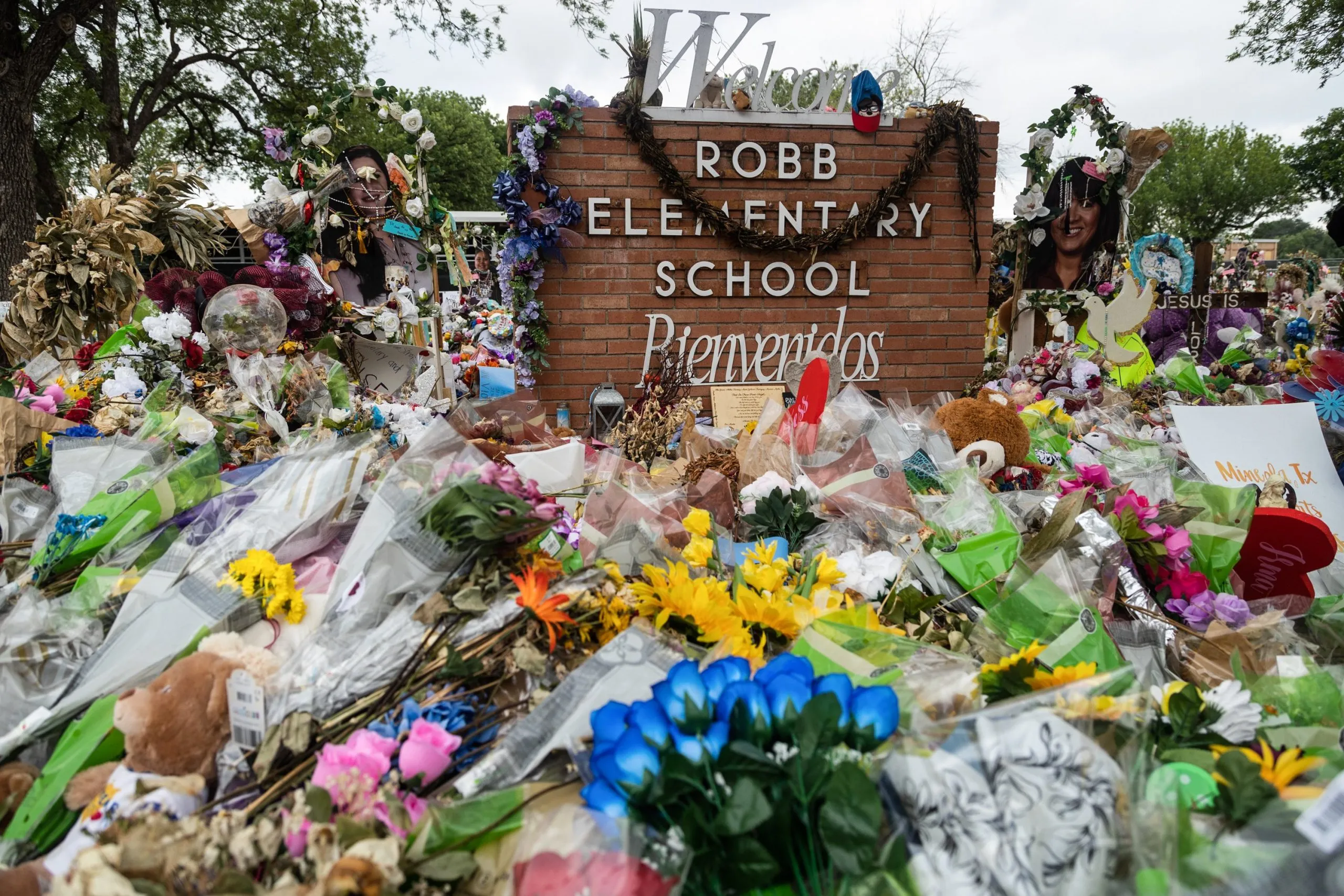
As the school day started on May 24, 2022, students and families at Robb Elementary in Uvalde, Texas were celebrating the end of the school year with trophies, friends and family. Many of those parents would never take their kids home. Hours later, 18-year-old gunman Salvador Ramos opened fire, killing 19 children and two teachers and injuring 17 others.
For viewers, listeners and readers across the country, news outlets played a pivotal role in information dissemination and contextualization. In addition to covering advances as they unfolded, viewers sought out answers and accountability through the work of reporters on the front line, among them, Zach Despart. Despart is a reporter with the ProPublica Texas Tribune Investigative Unit and was part of the team that spent over a year reporting on the Robb Elementary shootings.
Four years later, the reporting they did remains vital.
We sat down with Despart to talk about what the Uvalde files revealed, what it cost to report them and what the public still doesn’t fully understand about how the shooting unfolded.
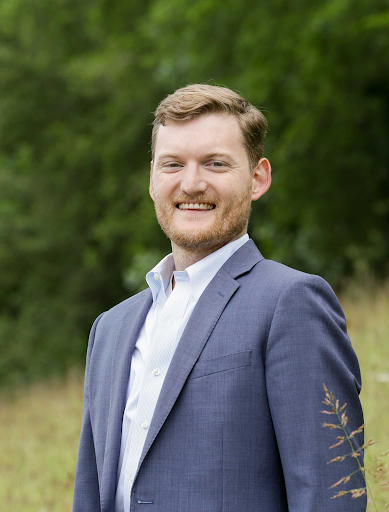
“I had just started at the Tribune in March of 2022,” Despart explained, “The shooting happened in May so I had been there for six weeks.”
It wasn’t Despart’s first school shooting. He had worked at a newsroom in Vermont when the Sandy Hook shooting took place in 2012.
“The initial reports in Uvalde reminded me of [Sandy Hook],” Despart explained. “ They had very little information. I just had the sense it was going to be very bad…This was also an elementary school.”
Leading Up To The Investigation
Despart and his partner didn’t arrive in Uvalde until a few days after the shooting, but they ended up staying for a week. He described covering the shooting during the “breaking news phase,” where the city was in disarray.
“Honestly, it was super chaotic. There were probably a couple hundred reporters from all over the world and it’s a pretty small place,” he said. Uvalde at the time was home to just 15,390 residents.
Despart also said his reporting was constrained because many key details were still unresolved. Although there were news conferences, nothing was conclusive as the investigation had just begun.
“People weren’t ready to talk,” he remembers. Funerals hadn’t even happened yet for the people [were] killed so there’s not a ton of reporting you can do that’s comprehensive.”
As the breaking news phase ended, national reporters left Uvalde, leaving local outlets like the Tribune to do the real, in-depth work.
Getting The Investigative Files
As part of his team’s reporting, they were able to gain exclusive access to what Despart called a “trove of information” through the investigative files, which revealed details up to the failed police response.
Obtaining the files took time and precarious groundwork with sources. The shooting happened in May, but it was fall before Despart had the files in hand.
“We realized for the first time in any major American mass shooting [that] we had this wealth of information to understand how it happened,” he said.
The files, which included body cam footage, crime scene photos, post-action interviews and radio traffic between first responders, were given to the Tribune team from a confidential source, making the Tribune the only outlet to have this access. This opportunity came with a responsibility, a fact not lost on Despart.
“We felt an obligation to do the most comprehensive work we can because it’s so rare to have that level of access into how a shooting unfolded,” he said. “That enabled us to do stories that no one else could do.”
By examining the different facets of the shooting through the files, Despart was able to produce three major investigative stories on different aspects of the shooting.
The first major story was on the failed police response on behalf of not only local but also state police, the second explained how the lack of coordination between first responders led to fatal delays, and the last story was a look at the significance of the weapon choice – an AR-15 battle rifle – which was used to kill the 21 victims.
The Tribune’s investigation revealed a complex web of factors and failures that contributed to the delayed response. For example, officers on patrol at the time lacked proper defense armor.
Knowing that a weapon of war was used, Despart said he and his team accounted for the immense danger officers were under and became “less aggressive” in their approach contacting the Uvalde Police Department.
The only law enforcement official who agreed to an interview was former Uvalde school district police chief Pete Arredondo. Despart later said that much of what Arredondo said “didn’t hold up to be true” when they looked into the files.
The Aftermath
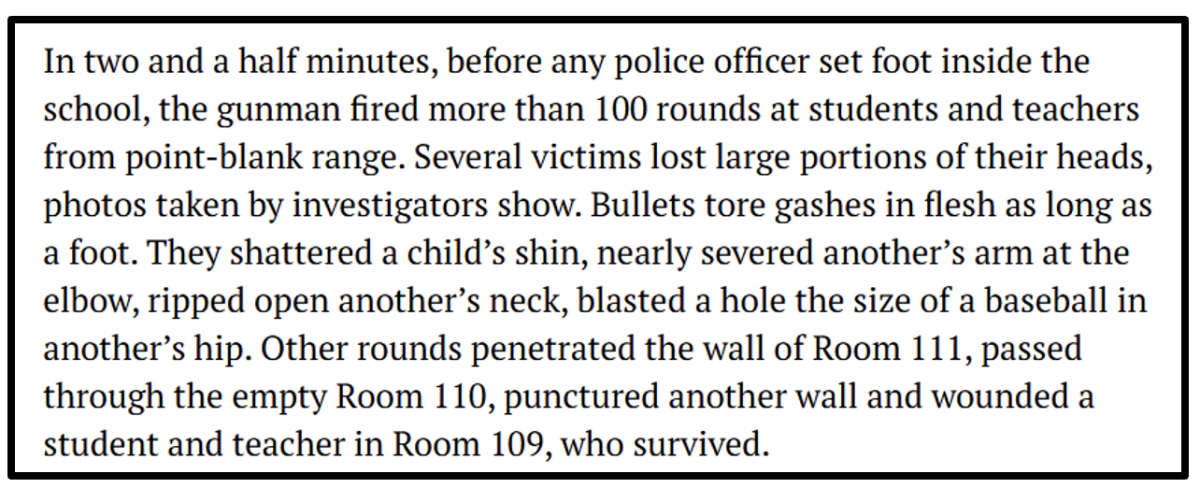
Excerpt from the Tribune’s “He has a battle rifle” article
Despart says the graphic nature of the evidence was the hardest part of reporting. “We looked at all the images and videos we got and took a lot of notes. That way, if we had to review something we could go to the notes instead of having to rewatch that stuff over and over again.”
Even then, the cumulative impact of reporting on the Robb Elementary shooting took its toll.
“I covered it for [around] a year and at the end of it, I noticed myself being easily bothered in life a lot – very irritable to the point that I was like: we’ve done good work on this,” he said. “I want to move onto something else.”
Despart is not alone. Secondary trauma is widespread in journalism. For decades, it was assumed that the events journalists cover do not leave lasting marks on the reporter—but like first responders, journalists routinely run toward conflict, not away from it.
According to ongoing research at the Global Center for Journalism and Trauma (formerly Columbia University’s Dart Center for Journalism and Trauma) between 80% and 100% of journalists have been exposed to traumatic events at work.
Despart explained the Tribune’s newsroom did a “pretty decent job” at the beginning of the investigation. But he still argued that reporter mental health is a topic that should be checked on regularly and is often not.
“It’s really important work, but it’s the worst possible subject to write about,” he said. “For horrible events like this, it’s important to think about how you as a reporter are processing it because it can really wear on your mental health.”
But despite how emotionally taxing the work was, Despart knows it’s important.
“People need to understand what happened to these kids and teachers because sometimes we get too sanitized of an explanation,” he said. “To understand [that] these victims were horrifically dismembered by this weapon helps people understand the gravity of the situation..”
Since covering the Robb Elementary shooting, Despart has continued to write on various topics revealing the weakness of authority figures in Texas. Recent work has included the fatal Camp Mystic flood, wrongful treatment of the disabled population in nursing homes, and more. He can be reached via email: zach.despart@texastribune.org.

- Inside the Files: The Reporting That Rewrote Uvalde’s Story - January 15, 2026
- Thanksgiving Turkey: Finding the Perfect Recipe - November 25, 2025
- Streaming Content Producer Angela Chen on reinventing local TV news for the streaming generation at ABC7 Chicago - December 6, 2024




i enjoy reading your articles, it is simply amazing, you are doing great work, do you post often? i will be checking you out again for your next post. you can check out webdesignagenturnürnberg.de the best webdesign agency in nuremberg Germany