Redefining “Healthy”: Who Gets to Decide?
Healthy is back in the headlines after the federal government released new “Dietary Guidelines for Americans” in January. The update, promoted under the Trump Administration’s Make America Healthy Again initiative, is one of the most substantial shifts in federal nutrition messaging in years.
To understand what’s actually changed — and what the public is supposed to do — it helps to look not only at the new guidelines, but at how they’ve been covered in the media. The result is a confusing picture but with one clear pattern emerging: the guidelines leave plenty of room for interpretation, leaving everyone trying to interpret what “healthy” is actually now supposed to mean.
By walking through how different outlets reported on the announcement, the coverage itself becomes a roadmap — revealing where the guidelines are clear, where they aren’t, and what they likely mean in practice.
Food: New Rules, New Ideas
More than 70% of U.S. adults are overweight or obese, and chronic disease consumes most of the nation’s health spending. In response, the federal government is positioning food as the first line of defense.
Changes at a Glance: Dietary Guidelines Messaging Shifts
The new federal guidelines nearly doubled recommended daily amounts of protein . Meanwhile, a push to consume full-fat dairy replaced years of low-fat messaging. Added sugars shifted from a suggestion to “limit to 10% of daily calories” to “avoid entirely.” And for the first time, the guidelines explicitly warned Americans against highly processed foods and sugar-sweetened beverages by name.
These changes may have abstract wording, but their consequences are anything but. The dietary guidelines shape meals for 30 million schoolchildren, influence SNAP benefits for 42 million Americans, and help determine what military personnel are served. When the federal definition of healthy changes, it reverberates through public institutions nationwide, but what happens when those changes are not clear?
| Topic | 2020-2025 Guidelines | 2025-2030 Guidelines |
| Overall framing | Focus on building healthy dietary patterns across the lifespan | Stronger emphasis on “real food” and reducing highly processed products |
| Dairy guidance | Recommends low-fat or fat-free dairy options | Encourages full-fat dairy with no added sugars |
| Protein guidance | Emphasizes a variety of protein foods within dietary patterns | Places stronger focus on prioritizing protein at meals |
| Processed foods | Advises limiting added sugars, sodium, and saturated fat | More explicitly calls for reducing highly processed foods |
| Tone and messaging | Technical public health guidance | More direct, consumer-facing language tied to national health concerns |
Both the old and new versions emphasize vegetables, fruits, and whole grains, but the framing now leaves far more room for interpretation While the 2020-2025 guidelines are technical and focused on lifelong dietary patterns the new version opens with phrases like “eat real food” and frames the issue as a national health emergency.
Perhaps the most striking change was the document itself: the guidelines shrank from 164 pages to just 10. At first glance, that sounds like progress — shorter, simpler, easier for people to read. But as media coverage quickly showed, the drastic streamlining also opened the door to widespread confusion about how the new language should actually be interpreted.
How Media Framed the Changes
When Health and Human Services Secretary Robert F. Kennedy Jr. and Agriculture Secretary Brooke Rollins announced the new guidelines, newsrooms reported on the same event but produced strikingly different narratives. The difference wasn’t in the facts, but in which details journalists chose to emphasize—and how they chose to frame them.
CNN and NBC News both led with the numbers. CNN reported that protein recommendations jumped to “1.2 to 1.6 grams per kilogram of body weight,” nearly double previous recommendations. NBC used a list format titled “6 biggest changes to know” and quoted Kennedy saying he was “ending the war on saturated fats.”
The emphasis on protein raised an obvious question. According to Marion Nestle in an interview with Science News, Americans already consume more protein than they need on average. Investigate Midwest reported that meat consumption in the United States is already among the highest in the world, with Americans eating 227 pounds per person annually in 2025, far above Europe’s 152 pounds and significantly higher than the global average. If excess consumption and obesity are among the health problems the guidelines are meant to address, why increase the emphasis on protein even further?
The emphasis on protein raised an obvious question. Marion Nestle, in an interview with Science News, noted that Americans already consume more protein than they need on average. Investigate Midwest reported that meat consumption in the United States is already among the highest in the world, with consumption reaching 227 pounds per person annually in 2025, far above Europe’s 152 pounds and significantly higher than the global average. If excess consumption and obesity are among the health problems the guidelines are meant to address, why increase the emphasis on protein even further?
Coverage also focused heavily on the dairy reversal. CNN noted that “for decades, previous dietary guidelines recommended low or fat-free dairy for everyone older than 2.” The updated version encourages full-fat dairy. NBC made a similar point, writing that the new guidance “prioritizes full-fat dairy with no added sugars.” That shift created another tension. The United States continues to face high rates of obesity and diet-related disease, yet the guidelines move away from the long-standing low-fat message.
These changes make the overall message harder to interpret. The guidelines frame themselves as a response to a national health crisis, but some of the new emphases do not clearly align with that goal.
Processed foods also loomed large in the coverage. NBC wrote that Kennedy “has frequently blamed ultraprocessed foods for contributing to chronic diseases” and noted the guidelines now “advise people to avoid packaged and ready-to-eat foods that are salty or sweet.” But what exactly counts as “salty” or “sweet” is not clearly defined, leaving readers to interpret the advice themselves.
Alcohol guidance created further confusion. Earlier versions gave specific limits: one drink for women and two for men. The new version simply says “limit.” NBC quoted NYU’s Marion Nestle: “What does ‘limit’ mean to someone who drinks alcohol? Less than what they are currently drinking, but how much less?” The vagueness itself became part of the coverage. In this frame, the guidelines were treated primarily as a policy update requiring translation.
The process story: what was left out
STAT News, PBS NewsHour, and Civil Eats asked a different question: what did not make it into the final document, and who was sidelined?
STAT’s headline set the tone. Kennedy, they reported, “discards 421 pages of scientific recommendations.” The outlet quoted Fatima Cody Stanford of the 2025 Dietary Guidelines Advisory Committee, who was “concerned by clear and specific discrepancies between the Committee’s Scientific Report and the final Dietary Guidelines.” She described the committee’s work as “a comprehensive, rigorously reviewed document,” while the final guidelines, she argued, presented “simplified claims that are often uncited, imprecise, and inconsistent with the underlying science.” STAT framed the moment as a breakdown in process rather than a helpful update.
Nutrition epidemiologist Lindsey Smith Taillie told PBS’s William Brangham that the new emphasis on meat and dairy conflicted with the advisory committee’s recommendations and raised potential conflicts of interest, explaining “When you look at who is on the Dietary Guidelines Scientific Committee and who funds their research, in the past, those scientists have been funded by organizations that produce ultra-processed foods.” Rather than telling viewers to accept or reject the guidelines, PBS asked a deeper question — who shaped the final document, and whose interests it serves.
Civil Eats focused on the backlash. The Center for Science in the Public Interest released alternative “uncompromised” guidelines just one day after the official version appeared. Policy associate Grace Chamberlin explained “If the DGA that came out had not been compromised at all… then we would not have released it.” The urgency of that response was indicative of how contested the guidelines immediately were. Civil Eats framed the moment not as a new policy, but as an ongoing fight.
What this means for meals
Welltech, CNN’s wellness section, and Science News attempted to cut through the confusion with practical advice.
According to Welltech, “If you’re confused about what you’re supposed to eat now, you’re not alone.” Both CNN’s wellness coverage and Science News turned to Marion Nestle for interpretation. She told CNN that limiting highly processed foods and added sugars were positive steps, calling those elements “really good things about it that can really make a difference.” But other parts, she said, remain “muddled, inconsistent, ideological, retro and hard to understand.”
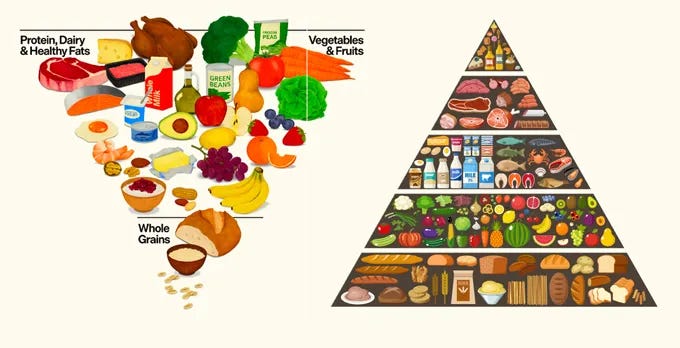
In her Science News interview, Nestle pointed to the confusion created by a graphic included in the new dietary guidelines, calling it “pretty” but “difficult to understand.” She also questioned the heavy protein emphasis, noting that “people are already eating twice as much protein as they need. Protein is never an issue in American diets.” One contradiction surfaced repeatedly across coverage: the guidelines encourage more meat and full-fat dairy while still keeping saturated fat capped at 10%. Full-fat dairy is back—yet the limit remains. How are consumers supposed to follow both? Most outlets didn’t resolve the tension. Instead, they boiled the advice down to a simple takeaway: eat more whole foods and keep added sugar low.
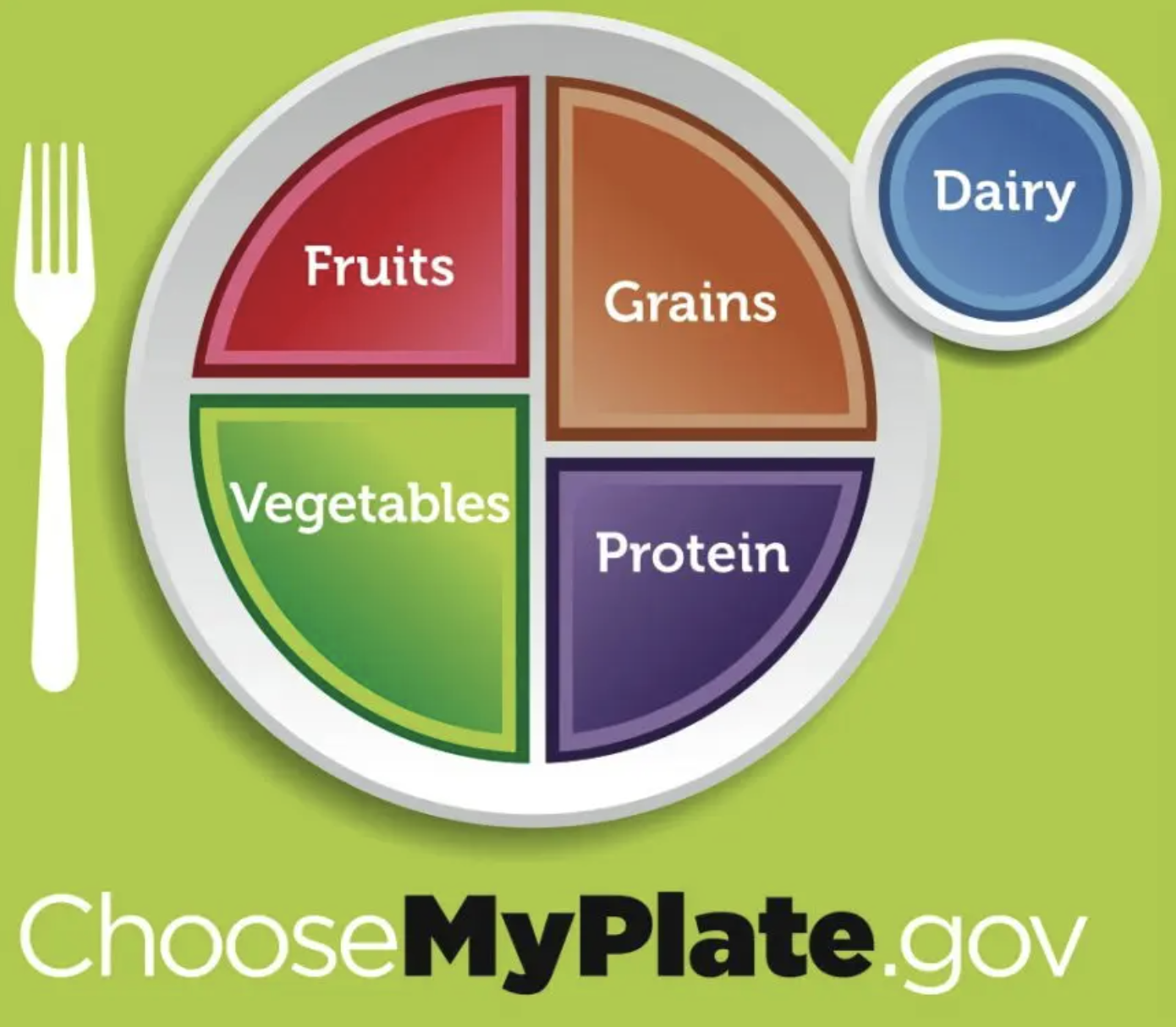
Three media frames, one policy—plenty of confusion.
The coverage shows just how differently the same federal guidance can be translated for the public. Some outlets focused on explaining the policy changes. Others scrutinized the process behind them. Still others highlighted the everyday confusion the guidelines may create for consumers.
When examined through this media-centric lens, the new guidelines illustrate a new emphasis, not on nutrition or science, but rather on authority and accountability. The federal government may offer a single definition of “healthy,” but the media landscape around it tells a far more complicated story about whose best interest this new definition really serves.

- What’s the real story behind the spread of AI data centers? It depends where you get your news. - September 22, 2026
- How we’re using topic modeling to understand news coverage of data centers - September 22, 2026
- Where Should Data Journalists Be This Spring and Summer? - May 6, 2026