AI and journalism Summer Roundup: The Reckoning Season
As Labor Day weekend came and went, so did any illusion that AI in journalism was still in its experimental phase. This summer alone, the New York Times’ publisher accused the biggest tech companies in history of theft, a Toronto editor discovered a freelancer had been fabricating her quotes from real sources with a chatbot, and one of journalism’s oldest ethics group sat down to rewrite its rulebook for the first time in over a decade.
The question shifted from whether newsrooms would use AI to who pays for it, who gets blamed when it fails, and who still gets to call the work journalism at all. Here’s what defined the last few weeks.
Money and lawsuits
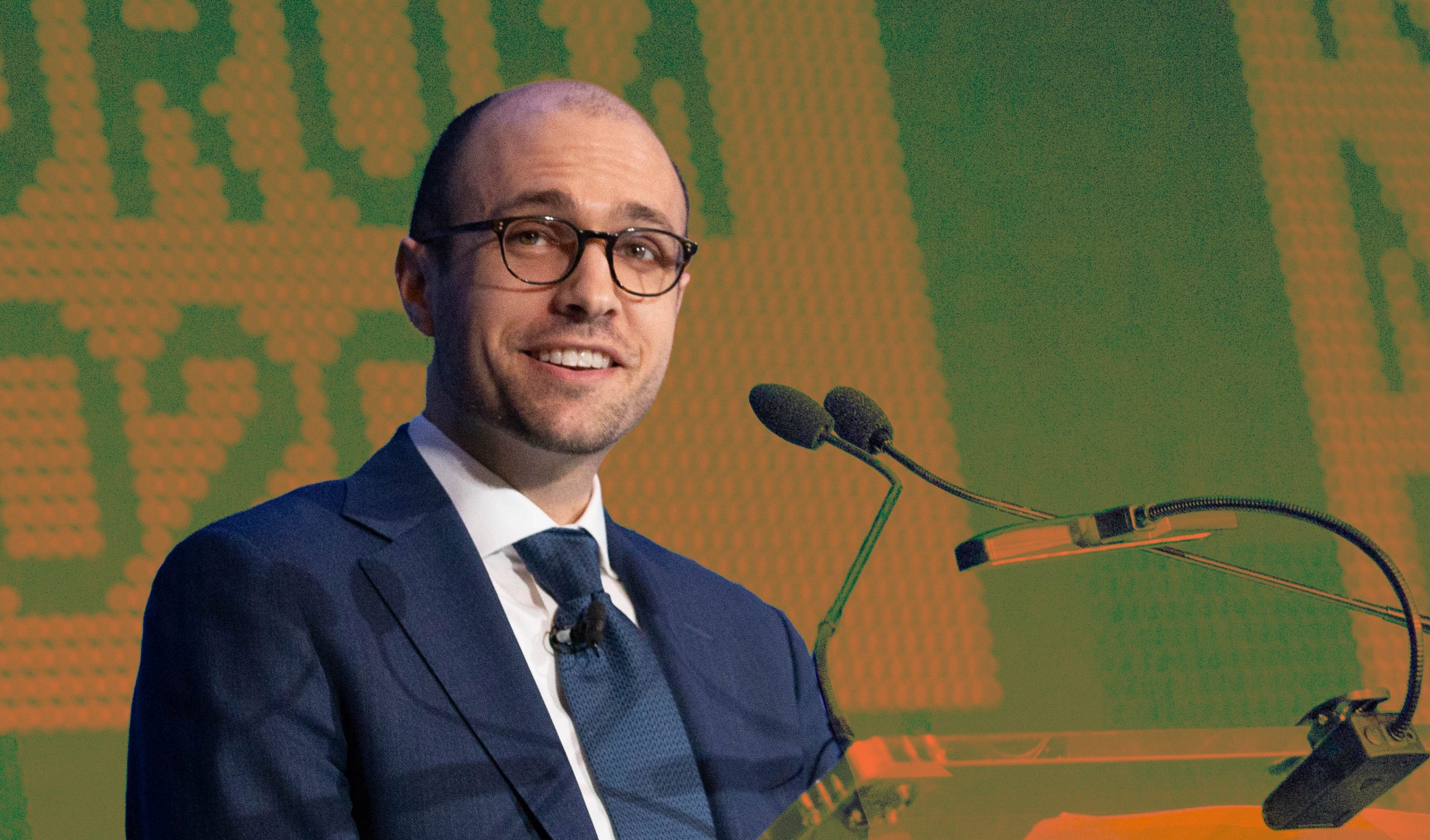
Addressing news leaders from more than 60 countries, New York Times Co. publisher A.G. Sulzberger accused AI companies of “brazen theft of intellectual property,” noting the six leading AI firms carry a combined $11 trillion valuation while, by his estimate, less than half of 1% of AI investment compensates the creators whose work trains the models. A.G. Sulzberger addressed a top researcher at Microsoft who wrote that one of the “core promises of LLMs” is their ability to use “their training data to substitute for the paid labor of those who created said data.”
That argument reached court Sept. 5, when The Seattle Times Co. and Newsday sued Microsoft and OpenAI, alleging the companies trained AI on their journalism without permission, ChatGPT reportedly reproduced an 88-word passage of the Seattle Times’ Pulitzer-winning Boeing coverage nearly verbatim.
Not everyone is suing: Axios spent the summer building out an OpenAI-funded local news bet instead, with the tech company bankrolling 13 new Axios Local newsletters under a three-year deal in exchange for training-data access, as Axios aims for 43 cities by year’s end. CEO Jim VandeHei has framed the bet as a question: “Could we use AI to basically automate everything you need in a local market other than the journalist and the journalism itself?” The stakes go beyond routine coverage, too: a Bulletin of the Atomic Scientists piece on AI’s threat to reporting on existential risks like nuclear weapons cited New York Times publisher A.G. Sulzberger’s warning that tech companies are “siphoning off the audiences and revenue that otherwise would go to the news organizations” that produce that reporting. The Reuters Institute data also cited only 12% of people are comfortable with news made entirely by AI. And the numbers rising slightly to 21% if there is a ‘human in the loop.’
Ethics and the law catch up
The Society of Professional Journalists proposed its first Code of Ethics revision in 12 years, only its sixth in the code’s history, adding language that journalists remain “ethically responsible for their work, regardless of tools and technologies used,” while pointedly never naming AI so the draft “will remain relevant as technology changes.” Members vote in October. Montenegro moved faster, replacing its 2015 journalism code on July 8 to require labeling of AI-generated content, following similar updates in Serbia, Albania, Turkey and North Macedonia.
Journalists’ unions are also wrestling with who counts as “press” in the first place. A European Federation of Journalists survey of 26 affiliates found them divided into three roughly equal camps on independent “news creators”: one third had no clear policy yet, one third accepted them under certain conditions, and one third rejected them as members outright. Meanwhile, the law is scrambling to catch up: after Character.AI and OpenAI both faced lawsuits over chatbots allegedly linked to a teen’s suicide and a mass shooting, their legal defenses claimed speech rights for the chatbots as “nonhuman speakers,” a claim a German court rejected in June, ruling Google liable for false information generated by its AI Overview feature.
Trust and verification
The summer’s starkest cautionary tale: Toronto-based The Local investigated freelancer Victoria Goldiee after discovering she’d published fabricated, likely AI-generated quotes. Four publications, including The Guardian and Dwell, took her stories down as a result. “We don’t know what is true and what’s not,” editor Nicholas Hune-Brown said. Even prize-winning work isn’t immune — a record eight 2026 Pulitzer awardees disclosed AI use, mostly for document analysis rather than writing — but a Reuters Institute survey found only 20% of the public trusts AI-generated news overall, even as weekly chatbot use for news crept up to 10% globally.
A new startup, Primary, launched what it calls the first AI-generated index, rating journalists on sourcing and accuracy rather than engagement. And the Wall Street Journal ran an undisclosed AI-assisted op-ed from billionaire Stanley Druckenmiller, only acknowledged after a reporter asked, with editor Paul Gigot saying there was no need to disclose it, while none of 24 other prominent newspapers surveyed by Nieman Lab said they’d follow the Journal’s approach.
Labor and workflow
Journalists are increasingly on both sides of the AI supply chain: another Reuters Institute report profiled freelance reporters in Canada, India, Germany and the U.S. now moonlighting as AI trainers, including Khaleda Khan, who worked for xAI and asked, “Am I helping make something that will replace me?” Investigative journalist Christo Buschek of Der Spiegel offered a similar critique in a Global Investigative Journalism Network masterclass, describing AI largely as a marketing term whose output is no substitute for real methodology.
Inside newsrooms, governance is uneven, a Reuters Institute analysis citing an FT Strategies/WAN-IFRA study of 448 newsrooms found that 57% have no AI representation in their organizations, even as the European Union’s AI Act began requiring disclosure of AI-generated text on public-interest matters Aug. 2. At the Claremont Courier, writer Mick Rhodes said submissions of AI-written stories, viewpoints and letters had multiplied dramatically in recent weeks, writing flatly: “Asking AI to write something for you does not make you a writer or a journalist.“
A global and cultural reckoning
Speaking in Venice on Sept. 2, where he was set to receive the festival’s Golden Lion for lifetime achievement, George Clooney warned that deepfakes are making it “harder and harder for us to discern the truth,” also flagging concentrated media ownership as its own threat. A study of South African and Zimbabwean newsrooms found editors using AI for transcription and headline writing, balanced with human judgment. Although the study also flagged that most systems are trained on Western datasets and leave African languages underrepresented. South Africa’s own draft AI strategy was found to contain fictitious academic references likely generated by AI hallucinations.
OpenAI, for its part, expanded philanthropic journalism support this summer, funding a “Newsroom AI Catalyst” program for 10 Ukrainian news organizations and providing more than 400 ChatGPT Edu subscriptions to journalism grad students and faculty at CUNY and Northwestern.
Where this leaves journalism
Rodrigo Zamith, a University of Massachusetts Amherst journalism professor, argues that the real threat isn’t job loss but economics: “More and more of the value is being extracted from news organizations by tech companies.” Guardian editor-in-chief Katherine Viner made a similar case in an essay, arguing AI accelerates “anti-human” trends already eroding attention and connection. She even tested asking AI to write the essay itself, calling the result “insufferably pompous and joyless.” What AI can’t do, she wrote, is on-the-ground reporting, talking to people or holding the powerful to account.
That’s the tension the summer leaves unresolved: the tools keep getting more powerful, and the argument over who journalism serves keeps getting louder.

- AI and journalism Summer Roundup: The Reckoning Season - September 17, 2026
- AI Can Fake the Crowd—But Not Replace It - April 28, 2026
- AI expands in newsrooms, raising pressure on trust and labor systems - April 2, 2026