Inside “Papaya Talk”: Northeastern Student Turns Mother-Daughter Conversations Into a Women’s Health Podcast
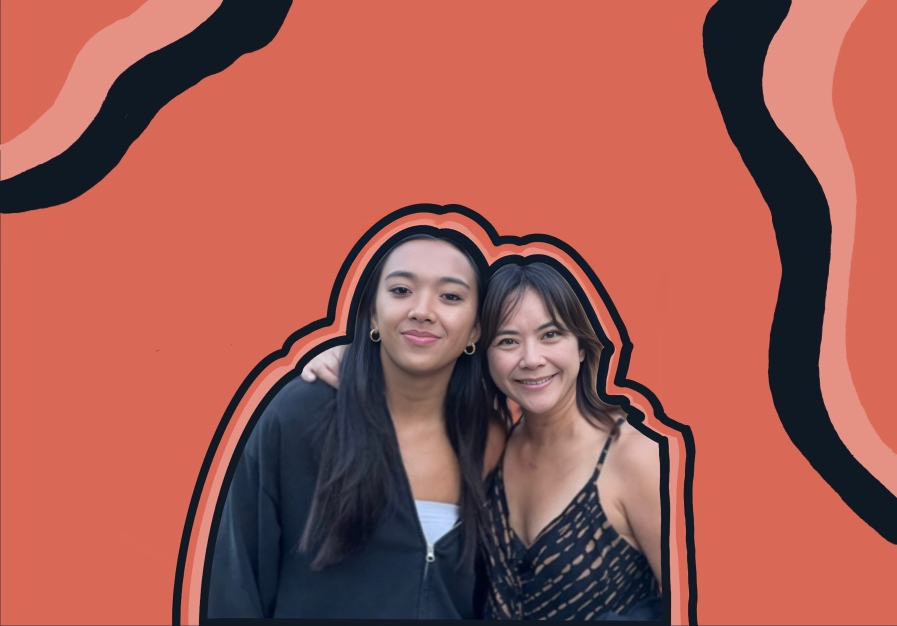
What began as a small women’s health podcast gradually evolved into a weekly ritual for mother-daughter duo Alyssa and Nadia Herrera-Set. “Papaya Talk,” launched in November 2022 by Alyssa and her colleague, originally focused on pelvic floor education and guidance for new and expecting mothers. When the colleague stepped away in 2023, Nadia — then a public health major with a minor in Spanish on the pre-med track at Northeastern University — stepped in as co-host, shifting the podcast’s energy and broadening its focus.
Her joining marked a turning point, steering the project toward open conversations about women’s health, daily college life and the kinds of questions young women often hesitate to ask. The series has accompanied her [Nadia] through her time at Northeastern, with the duo recording 15- to 45- minute episodes each week during the academic year.
Alyssa, a Bay Area physical therapist who works with gymnasts and dancers and is a certified Pilates instructor, brings her clinical expertise to the show. Nadia contributes her perspective as a college student learning about health and adulthood in real time. Together, they’ve built a conversational, intergenerational space that blends professional insight with personal experience.
This interview has been edited for clarity.
What inspired you to start Papaya Talk, and what message did you want to share through the podcast?
It actually started with my mom and one of her co-workers as a women’s health podcast. In the beginning, it was meant to help new or expecting moms with pelvic floor tips and topics related to physical therapy and women’s health.
Then her co-worker decided to step back — I think another job opportunity came up, and she didn’t have time for the podcast anymore. Around that same time, I had gone on an episode with them because they were curious about what kinds of questions girls my age had in regard to pelvic floor health.. After that, my mom asked if I wanted to continue the podcast with her.
She had already put money into advertising and creating their website and social media, including hiring people to help with that, so she didn’t want the podcast to disappear. I thought it sounded like a fun opportunity.
My main goal is to show conversations between a mother and daughter. I think that’s really important and often difficult at this age. We started with women’s health topics, and it’s helpful for me to talk about them with my mom because there’s a lot I also don’t know.
We talk about things like periods, birth control, health in college and how to make healthy eating choices. We’ve also brought on guests and interviewed a doula, a sleep therapist, dietitians, and nutritionists. It’s nice to get those conversations out there and it also makes it easier for me to talk about these topics with my own mom.
So yeah, it started as a women’s health and pelvic floor podcast and has evolved into a mother-daughter women’s health podcast that follows me through college.
How did your time at Northeastern influence your approach to storytelling and digital media?
I didn’t take any digital media classes, but as a public health major, I take many classes in health communication. We often talk about health topics and opening up conversations about women’s health has always been really helpful.
You can also see on TikTok that many influencers are starting to educate young women about what’s happening in their bodies. There’s still so much we don’t know, or don’t talk about, and often just let happen without explanation.
Can you walk me through your process for creating an episode, from idea to publication? How do you choose your guests and decide which topics to highlight?
For topics, it’s usually just things my mom and I had talked about during the week, or she’ll send me news articles about relevant health issues. Sometimes, I’ll see something online and say, “Oh, maybe we should talk more about this.” These ideas usually come from conversation or topics that are already being discussed, and sometimes from things I recently experienced or still have questions about.
For guests, we usually choose people based on a conversation we’ve already had. The podcast has followed me throughout college, and so when I started, I was trying to navigate things like the dining hall, sleep and stress. So we talked to a dietitian, a sleep therapist and other experts in topics we had already explored.
Sometimes my mom knows someone she wants to reach out to, and we’ll frame an episode around that topic ahead of time. We’ll record an episode about it first and publish it, and then release the interview about a week later.
If it’s just me and my mom, we usually just talk and don’t plan much — it’s easier that way. But when we have a guest, we send our questions ahead of time and also introduce their bio, which makes it a little more formal.
What digital tools or platforms have been most helpful in producing and promoting the show? How do you use sound design or editing techniques to keep your audience engaged?
We record on Riverside. I’m pretty sure it’s mostly used by people who make podcasts. I have a whole bunch of podcasting equipment, but Riverside takes our recordings and makes sure the video isn’t blurry and the audio isn’t bad. It’s kind of like Zoom, just a more fancy podcast version.
For social media, we have someone who helps us. Previously, a college student from UCSD who knows my mom handled most of it. I think Riverside can also take your information and, using AI, create a summary. From Riverside, the episode is uploaded to Spotify, and then we usually make a small reel. Another student had been handling that before, but now my mom has hired an outside person who I haven’t met. She’ll publish the podcast to Spotify with a video and usually pick the most interesting part to make a clip for Instagram.
I think our social media has a lot of room to grow. It’s hard to manage because my mom and I don’t have much time, which is why we hired someone. If we were doing it ourselves, it might look different. For now, we take the video from Riverside, publish it to Spotify and then if there’s time, post a clip on Instagram.
Unless there’s a guest, our episodes are a pretty casual conversation. Because our promotional efforts are minimal, it’s basically, “If you know us, you know we have this podcast,” and you might find a reel on Instagram. Our recordings aren’t edited much unless there’s a major technical issue or a loud noise in the background. The conversations are posted as is, which helps keep the podcast feeling natural.
What challenges have you faced in growing the podcast, how have you overcome them, and what’s your viewership like?
I think the main challenge is that not many people listen to the podcast. That goes hand in hand with the minimal promotion we do and with just putting it on Spotify for whoever finds it.
At the start of each season — basically each school year — my mom and I come back in September and ask ourselves how we want to move forward. It’s always a question of whether we’re doing the podcast the way we want to.
I really like having these conversations with my mom, I’m passionate about topics we talk about. I’m always talking about things I want to know more about or that I’m interested in, so it’s rewarding to put those conversations out there.
What’s even more rewarding is when people come up to me and say, “Oh my God, I saw your podcast,” or, “I listened to your podcast the other day and I really liked it.” That usually happens with my roommate’s parents or my roommates, who say their moms liked an episode.
So yeah, the main challenge is getting people to listen. I know there’s a way to check our listeners numbers, but I’m not sure if I have access to it. Sometimes our Instagram reels get a couple thousand views, but that’s not consistent. I’m not doing it for that, though. I just want the podcast out there in general, and if it ever gains traction or becomes more well-known, that would just be extra.
My mom probably feels the same way. We haven’t made any major changes in the last two years; we’ve kept things consistent. Overall, it’s a rewarding experience. I don’t talk about it enough, but I’m really proud of it. I’m glad that I joined my mom in 2023 — it’s been great.
What advice would you give to students or recent graduates who want to build their own digital media projects?
That’s a really good question. I think the first thing that comes to mind is that if you’re passionate about it, why not? I’m passionate about the topics we talk about on the podcast — women’s health and helping other college-age girls.
It’s easy for me to get on — I guess I can call it a Zoom — with my mom every week and record an episode because I like talking about it, and you could get me talking for a while. If you’re passionate about it and there are no obstacles in your way, I’d honestly just say: why not start?
You don’t need fancy podcast equipment or access to Riverside. You can start your own by videotaping yourself, using your phone camera or using voice memos. It doesn’t have to be a big production.
If you’re passionate about it, I wouldn’t pass up an opportunity to get that stuff out there in podcast form.
This being a more female tailored podcast, how has your identity shaped the conversations and tone of the show?
I don’t think that was necessarily the intention when I first joined. But the podcast has really followed me through college and the experiences that I’ve had, along with what my friends have been going through. Because of that, we naturally mix in women’s conversations and overall health topics.
It’s really like you’re on the phone with me and my mom. I’d say it’s more female tailored, although there are definitely episodes anyone can listen to. Recently I’ve talked a lot about med school, and in the past I talked about school and college in general, which applied to everyone. But the women’s health topics are definitely geared toward women.
All of our guests have been women too, and that’s something we consider when inviting people on. Hopefully in the future we’ll get more listeners.


Thank you for featuring us! It’s been really fun to do the podcast and this article really summarizes it well.