KSL-TV is proving news organizations can make money on social media. Here’s how.
When KSL News, one of Utah’s top ten outlets, asked Christie Taylor to build them a social media team, she was hesitant.
Taylor, who was working in project management at the time for KSL’s parent company, Bonneville International, felt that managing an entire team would be “a bit of a lift,” but her digital and social media experience made her the perfect candidate for the job and so she took it.
Since then she has been wrangling the task of assembling a social media team and integrating it with an outlet that, for decades, has operated primarily as a linear TV news station, meaning viewers watch scheduled programming at set times.
“For people who have done linear most of their career, it’s been a headache to try to force them into this new world,” Taylor said. “I’ve worked in digital my whole career, and pushed social media, and people are like, ‘you’re cute,’ and, ‘who cares about social.’”
It wasn’t until people saw the potential for revenue generation through social media that these attitudes began to shift.
“The last three years, while I was working in the corporate of Bonneville, we started monetizing all of our pages, so then we started to see income coming in,” Taylor said. “I think that’s when people started to pay attention, because there was revenue attached to it, so it’s no longer just this dumping ground, it’s, if we do it right, we could actually make money off of it.”
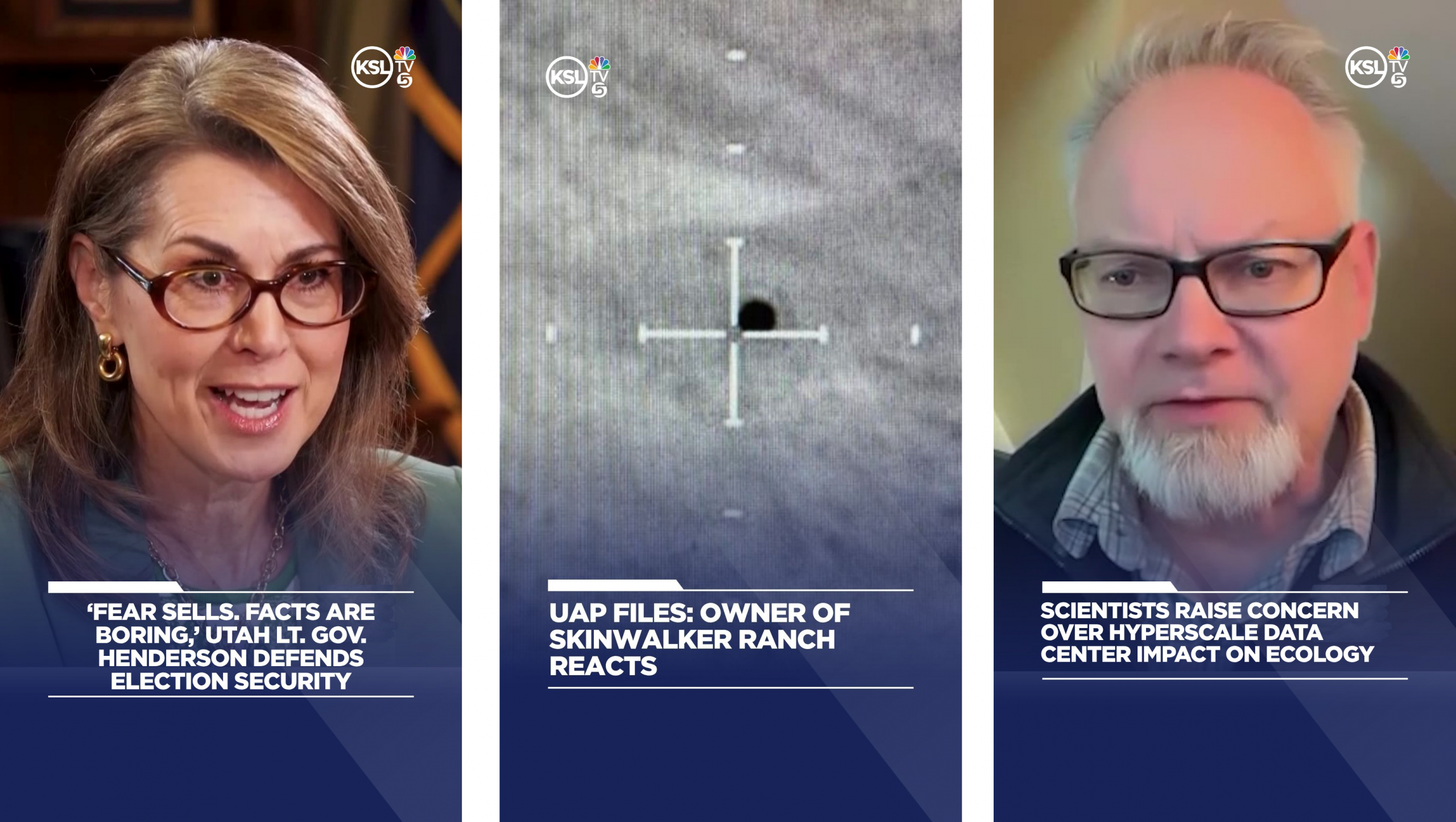
Currently, KSL has monetized both Instagram Reels and Instagram carousels, through the platform’s performance‑based bonus programs, or creator fund, rather than through traditional ad revenue. This means that revenue is generated based on the content’s views and overall performance. They have also monetized content on YouTube and Facebook, though this revenue is generated through either ads placed throughout the content by YouTube, or ads that run alongside their content, respectively. Additionally, KSL generates revenue from sponsored posts and paid social media content.
Since introducing these strategies, KSL has seen growth on all stations that have monetization strategies implemented, with their content predicted to contribute an incremental six‑figure value each year.
Putting digital first
Taylor said that while it’s great that KSL employees are beginning to see social media as a legitimate form of communication and a worthwhile investment, she wants them to start thinking with a “digital first” mindset. This means making content specifically for social media rather than just using it as a tool to drive engagement audiences to the network’s website or scheduled programming.
“The hardest part is trying to tell them that people don’t appointment view anymore [or] appointment listen to radio. They keep trying to use social media to push to live on air and that’s just not the way that social media works. We want people to stay on our digital platform,” she said. “Maybe 1,000 people are watching you on TV, but 1 million people are seeing this when we put it out on social media and being able to get the analytics and show them that this is where we have an audience and this matters, and this is where we build our brand has been really valuable.”
In 2025, a survey conducted by Reuters found that 39% of 18-24-year-olds get their news from social media, up from 21% in 2015, and that since that time, social media has overtaken news websites and apps as young people’s main source of news.
And social media isn’t just where young people get their news, it’s where they decide how they feel about political issues, and how they’ll vote at the ballot box.
The 2024 presidential election, dubbed ‘The podcast election,’ because of President Trump and Kamala Harris’ appearances on the popular shows “The Joe Rogan Experience,” or JRE, and “Call Her Daddy,” respectively, showed the power of digital media in the political space. Trump’s appearance on JRE alone garnered over 100 million downloads, double the amount of people who watched the first presidential debate between Trump and Biden on CNN.
Taylor said that she’s experienced this trend throughout the interview process at KSL.
“I’ve done a lot of interviews, and I always ask, ‘where do you get your news?’ and they all say, social media,” she said. “They get it on social media, and they follow people that they trust on social media.”
Taylor said all of these signs point to a trend that’s hard to ignore; we are shifting away from traditional forms of media consumption and into the digital space.
“You’ve got to be where people are. Once we get through another generation, you’re not going to have people turning on a TV at 10 o’clock at night to watch the news or turning on the radio when they get in the car,” she said. “I think in the last three years, it’s become really apparent to me that we can’t use social anymore as a lift for linear. We have to really make sure that we’re investing in the digital space and we’re doing things digitally and socially first.”
Taylor hopes that her team will attract a younger audience to KSL and have the autonomy to cover stories independently of KSL’s TV or radio arms. To do this, she’s searching for storytellers who are also “social natives,” people who have grown up using social media and have an innate understanding of it.
“In building this team, my hope is that we are able to bring in people with really good expertise, but who also are really good visual storytellers. I just hired a girl who will be our social content producer, but she’ll also be a social reporter. So [I’m] trying to put a face there that’s a brand related face that can talk to people and kind of build our reputation that way,” Taylor said. “If TV doesn’t want to go cover a story, or radio doesn’t want to go cover a story that doesn’t mean we don’t have to go cover that story in digital or social [media]. It’s creating space for us to be able to have some autonomy in storytelling, and doing that in a way that’s informing that younger audience.”
Taylor said she’s enjoyed watching legacy media organizations transition into the digital space and often draws inspiration from them, but at the end of the day it’s thinking outside the box and being creative that will set news organizations apart.
“It’s been really interesting to see how, like a traditional newspaper, like the Wall Street Journal or the New York Times, is transitioning into that digital space. I like to see how they’re getting creative on social media to do news. I love, I think it’s, The Today Show, does a Snapchat, and I just love it … they’ve started like snap news, just different ways of making news informative and fun,” she said. “We [KSL] look to a lot of those [organizations] to see how it’s happening, and then come up with our own ideas. You emulate, or come up with your own ideas out of that. You have to get creative.”
As other news organizations start to turn to the digital space, Taylor said that the most important thing to focus on when producing content for social media is to focus on honing their visual storytelling craft.
“If you’re a storyteller, get really good at visual storytelling,” she said. “It’s knowing how to put a story up that’s going to stop people from scrolling, and why that happens. I even look at the psychology of how people read … I think some people just think, ‘oh, you just throw it up there and do whatever, and it doesn’t matter,’ but it does, and I think the better you can visually tell a story, the better your content is going to do.”
The most important thing, she said, is realising that now is the time to move into the digital space, and that those who don’t will be left behind.
“Don’t underestimate digital. That’s the biggest mistake you’ll make going forward,” she said. “People have underestimated it for too long, and they’re late to the party. So get on board and let’s go.”